More About This Card
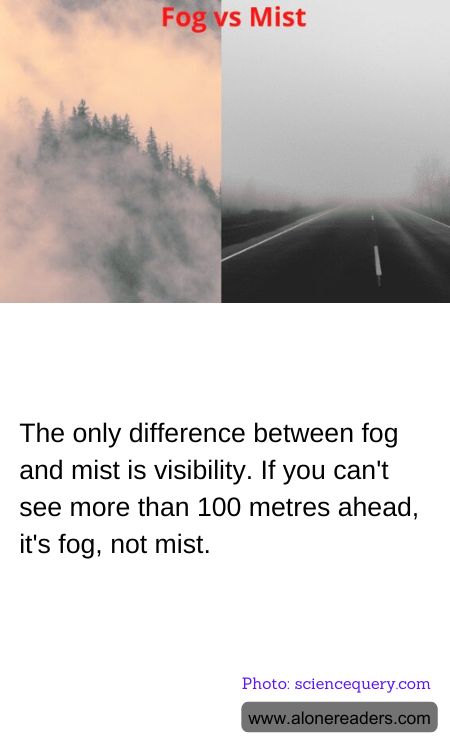
Fog and mist are two atmospheric phenomena that often create a sense of mystery and enchantment in the environment. While they may appear similar to the casual observer, the primary distinction between the two lies in visibility. This subtle difference is crucial for meteorologists and can have significant implications for transportation and daily activities.
Fog and mist are both composed of tiny water droplets suspended in the air, which form when the air is cooled to its dew point, causing water vapor to condense. The key factor that differentiates them is how far one can see through them. According to the World Meteorological Organization, if visibility is reduced to less than 100 meters (328 feet), the phenomenon is classified as fog. In contrast, if visibility is greater than 100 meters, it is considered mist.
This distinction is not merely academic; it has practical applications in various fields. For instance, fog can significantly impact transportation, particularly for drivers, pilots, and mariners. Reduced visibility can make navigation challenging and increase the risk of accidents. As such, understanding whether conditions are foggy or misty can help in making informed decisions about travel and safety measures. In aviation, for example, fog can lead to flight delays or cancellations, while mist might not have as severe an impact.
The formation of fog and mist is influenced by several factors, including temperature, humidity, and topography. Coastal areas, valleys, and regions near large bodies of water are particularly prone to these conditions. In these areas, the cooling of warm, moist air over cooler surfaces often leads to the formation of fog or mist. Additionally, human activities, such as urbanization and pollution, can also contribute to their occurrence by providing additional particles for water vapor to condense around.
While fog and mist can be inconvenient, they also offer a unique beauty to the landscape. They can transform ordinary scenes into ethereal vistas, softening edges and muting colors. This atmospheric effect has long been a source of inspiration for artists, photographers, and writers, who seek to capture the transient beauty of these natural phenomena.
In conclusion, while fog and mist share many similarities, the distinction in visibility is a critical factor that sets them apart. Understanding this difference is essential for safety and navigation, as well as for appreciating the subtle nuances of our natural world. Whether enveloping a city skyline or drifting through a forest, fog and mist continue to captivate and challenge us, reminding us of the delicate balance between nature and human activity.