More About This Card
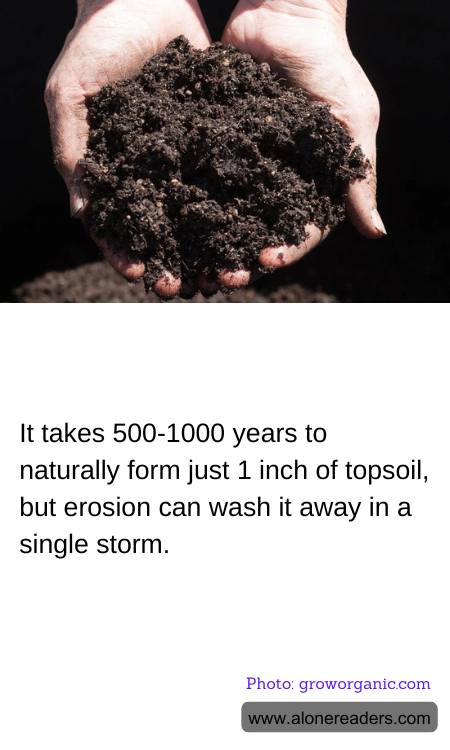
The formation of topsoil is a slow and intricate process, taking anywhere from 500 to 1,000 years to naturally develop just a single inch. This thin layer of soil is crucial for life on Earth, serving as the foundation for plant growth, which in turn supports entire ecosystems and human agriculture. Topsoil is formed through the gradual breakdown of rocks and organic matter, aided by the action of microorganisms, weathering, and the decomposition of plant and animal material. Despite its slow formation, topsoil is incredibly vulnerable to erosion, a process that can strip away this precious resource in a matter of hours during a single storm.
Erosion is primarily caused by water and wind, which can rapidly remove topsoil if it is not adequately protected. When heavy rains fall on exposed soil, the force of the water can dislodge soil particles and carry them away. Similarly, strong winds can lift and transport loose soil, especially in arid regions. Human activities such as deforestation, overgrazing, and poor agricultural practices exacerbate the problem by leaving soil unprotected and more susceptible to erosion. The loss of topsoil not only diminishes the land's fertility but also contributes to environmental issues such as sedimentation in waterways, reduced water quality, and increased flooding.
The consequences of topsoil erosion are far-reaching. For farmers, the loss of topsoil means reduced crop yields and increased reliance on chemical fertilizers to maintain productivity. This can lead to a vicious cycle of soil degradation and environmental harm. For ecosystems, the removal of topsoil disrupts habitats and reduces biodiversity, as plants struggle to take root in the depleted soil. Moreover, the sediment carried away by erosion can clog rivers and streams, affecting aquatic life and water availability for human use.
To combat soil erosion, it is essential to implement sustainable land management practices. Techniques such as planting cover crops, maintaining vegetation buffers along waterways, and practicing no-till farming can help protect the soil from erosion. Additionally, reforestation and the restoration of natural landscapes can stabilize soil and reduce the impact of wind and water. Educating communities about the importance of soil conservation and encouraging responsible land use are also critical steps in preserving this vital resource.
In conclusion, while it takes centuries to form a mere inch of topsoil, it can be lost in the blink of an eye due to erosion. Protecting this invaluable resource requires a concerted effort from individuals, communities, and governments worldwide. By adopting sustainable practices and raising awareness about the importance of soil conservation, we can ensure that future generations inherit a healthy and productive environment.