More About This Card
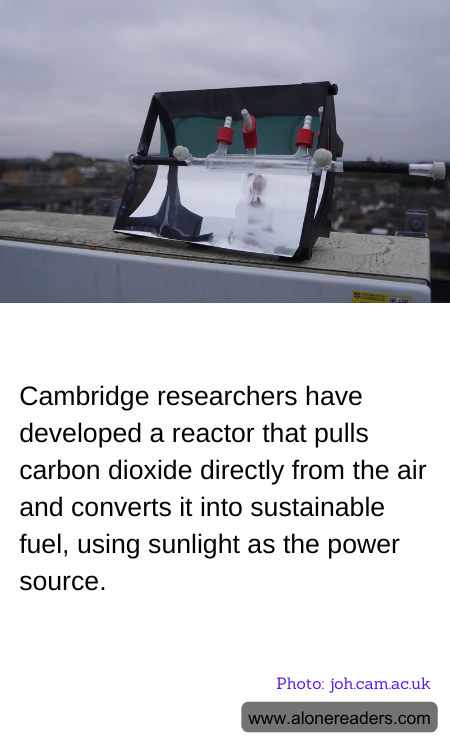
In a groundbreaking development, researchers at the University of Cambridge have unveiled a revolutionary reactor capable of capturing carbon dioxide directly from the atmosphere and converting it into sustainable fuel. This innovative technology harnesses the power of sunlight, offering a promising solution to two of the world's most pressing challenges: reducing atmospheric CO2 levels and creating renewable energy sources.
The reactor operates by mimicking the natural process of photosynthesis, where plants convert sunlight into energy. However, instead of producing glucose, this artificial system generates liquid fuels that can be used as a sustainable energy source. The core of this technology is a sophisticated photocatalytic system that absorbs sunlight and uses it to drive chemical reactions, transforming CO2 and water into hydrocarbons. These hydrocarbons can then be refined into fuels such as methanol, which can be used in existing engines and infrastructure, making the transition to cleaner energy more feasible.
One of the most remarkable aspects of this reactor is its ability to function under ambient conditions, without the need for high temperatures or pressures. This makes the process energy-efficient and potentially scalable for widespread use. The researchers have emphasized that their design is modular, meaning it can be adapted and expanded to suit different scales of operation, from small installations to large industrial setups.
The implications of this technology are profound. By directly removing CO2 from the air, the reactor not only helps mitigate the effects of climate change but also provides a renewable source of energy that could reduce our reliance on fossil fuels. This dual benefit positions the reactor as a pivotal tool in the global effort to transition to a more sustainable and environmentally friendly energy landscape.
While the technology is still in the experimental stage, the researchers are optimistic about its future applications. They are currently working on optimizing the efficiency of the system and exploring ways to integrate it with existing energy infrastructures. If successful, this reactor could play a crucial role in achieving net-zero emissions and combating global warming.
The development of this reactor represents a significant step forward in the quest for sustainable energy solutions. By turning a greenhouse gas into a valuable resource, the Cambridge researchers have opened up new possibilities for addressing the environmental challenges of our time. As the world continues to grapple with the impacts of climate change, innovations like this offer hope for a cleaner, more sustainable future.