More About This Card
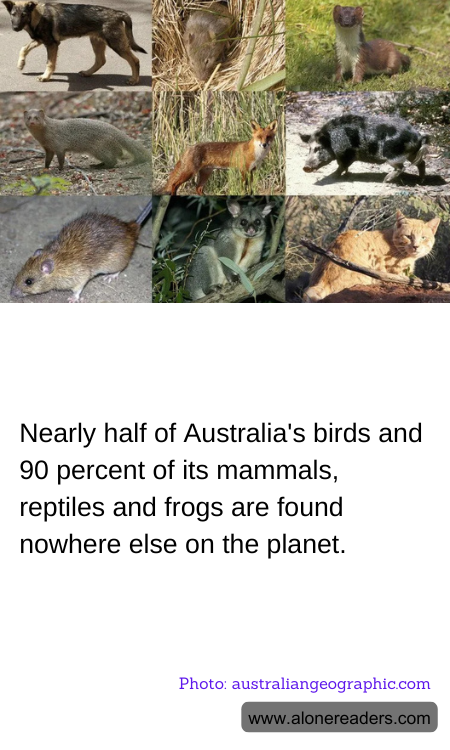
Australia is a land of remarkable biodiversity, home to a vast array of unique wildlife that captivates the imagination of nature enthusiasts and scientists alike. Nearly half of Australia's bird species and an astounding 90 percent of its mammals, reptiles, and frogs are endemic, meaning they are found nowhere else on Earth. This extraordinary level of endemism makes Australia a vital sanctuary for global biodiversity and a living laboratory for evolutionary biology.
The continent's isolation, having separated from the supercontinent Gondwana around 180 million years ago, has allowed its flora and fauna to evolve in relative seclusion. This isolation has given rise to a unique evolutionary path, resulting in species that are not only distinct but also highly adapted to Australia's diverse environments, from arid deserts to lush rainforests. The iconic kangaroo, the elusive platypus, and the vibrant lyrebird are just a few examples of the extraordinary creatures that call Australia home.
Australia's birds are particularly fascinating, with nearly half of its 800-plus species being endemic. The country's avian diversity is showcased by species like the emu, a flightless bird that roams the open plains, and the kookaburra, known for its distinctive laughing call. These birds play crucial roles in their ecosystems, from pollination to seed dispersal, and are integral to the ecological balance.
The continent's mammals are equally remarkable, with marsupials like the koala and the Tasmanian devil capturing the world's attention. Marsupials, which give birth to underdeveloped young that continue to grow in a pouch, are a testament to the unique evolutionary paths taken by Australian wildlife. Additionally, monotremes such as the echidna and platypus, which lay eggs instead of giving birth to live young, further highlight the distinctiveness of Australia's mammalian fauna.
Reptiles and amphibians in Australia are no less extraordinary. The country is home to a diverse range of reptiles, including the fearsome saltwater crocodile and the frilled-neck lizard, which are adapted to thrive in various habitats. Australia's frogs, too, are a testament to the continent's unique biodiversity, with species like the colorful corroboree frog showcasing the vibrant life that thrives in its ecosystems.
However, this unique biodiversity faces significant threats. Habitat destruction, climate change, and invasive species pose serious challenges to the survival of many of Australia's endemic species. Conservation efforts are crucial to protect these irreplaceable creatures and the ecosystems they inhabit. Initiatives such as protected areas, wildlife corridors, and breeding programs are vital in ensuring the survival of Australia's unique wildlife for future generations.
Australia's rich tapestry of life is a source of wonder and inspiration, offering invaluable insights into the processes of evolution and adaptation. The continent's unique wildlife not only enriches our understanding of the natural world but also underscores the importance of preserving biodiversity. As stewards of this remarkable heritage, it is our responsibility to ensure that Australia's unique species continue to thrive in their natural habitats, contributing to the planet's ecological richness.