More About This Card
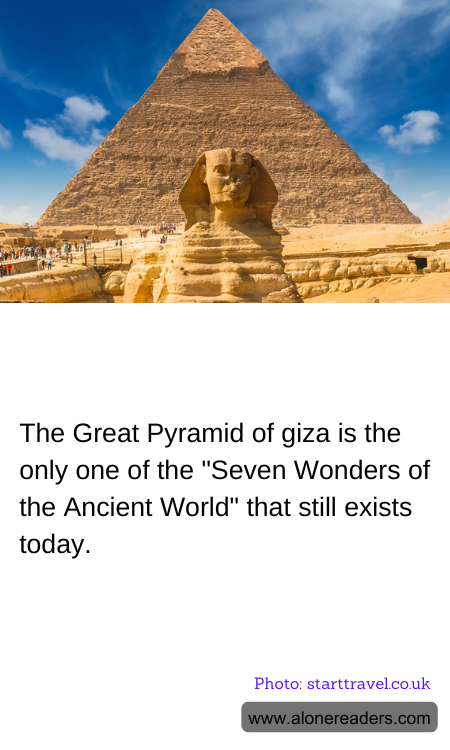
The Great Pyramid of Giza stands as a testament to the ingenuity and ambition of ancient civilizations. It is the only surviving structure of the original Seven Wonders of the Ancient World, a list compiled by ancient Greek historians that celebrated remarkable constructions of their time. While the other six wonders have succumbed to the ravages of time, the Great Pyramid continues to captivate the imagination of people around the globe.
Constructed around 4,500 years ago during the reign of Pharaoh Khufu, the Great Pyramid was originally built as a tomb to honor the Egyptian king. It is the largest of the three pyramids on the Giza plateau and was the tallest man-made structure in the world for over 3,800 years. The pyramid's original height was approximately 146.6 meters (481 feet), though it now stands slightly shorter due to the loss of the outer casing stones.
The construction of the Great Pyramid is a marvel of engineering. It is estimated that around 2.3 million blocks of stone, each weighing an average of 2.5 tons, were used in its construction. The precision with which these massive stones were cut and placed is astonishing, especially considering the limited technology available at the time. The pyramid's alignment with the cardinal points of the compass and its near-perfect symmetry further highlight the advanced understanding of mathematics and astronomy possessed by the ancient Egyptians.
Despite centuries of study, many aspects of the Great Pyramid remain shrouded in mystery. Scholars continue to debate how the ancient Egyptians managed to transport and assemble such massive stones. Various theories have been proposed, ranging from the use of ramps to more complex systems involving levers and counterweights. The exact methods remain a topic of fascination and speculation, adding to the pyramid's allure.
The Great Pyramid's enduring presence is not only a symbol of ancient Egyptian civilization but also a reminder of humanity's enduring quest for knowledge and achievement. It has inspired countless explorers, historians, and archaeologists to delve into the mysteries of the past. Its significance extends beyond its historical and architectural value; it serves as a cultural icon, representing the ingenuity and resilience of human endeavor.
Today, the Great Pyramid of Giza attracts millions of visitors each year, who come to marvel at its grandeur and contemplate the achievements of a civilization long past. It stands as a bridge between the ancient and modern worlds, a monument to the enduring legacy of human creativity and ambition. As the only surviving wonder of the ancient world, the Great Pyramid continues to inspire awe and wonder, reminding us of the remarkable feats that can be accomplished through determination and ingenuity.