More About This Card
In our increasingly digital world, the convenience of having a smartphone at our fingertips has become indispensable. However, this convenience comes with a hidden cost that many are unaware of: "text neck." This modern ailment is a result of the posture we adopt when looking down at our phones, and it can have significant implications for our spinal health.
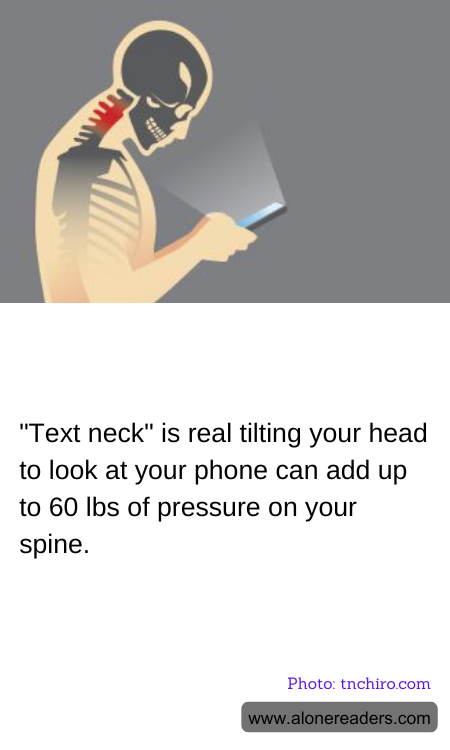
When you tilt your head forward to look at your phone, the angle at which you hold your head can dramatically increase the pressure on your spine. At a neutral position, with your head upright, the human head weighs about 10 to 12 pounds. However, as you tilt your head forward, the weight your neck has to support increases exponentially. Research indicates that at a 15-degree angle, this weight increases to about 27 pounds. At 30 degrees, it rises to 40 pounds, and at 60 degrees, the pressure can be as much as 60 pounds. This is equivalent to carrying a small child around your neck for extended periods.
The consequences of this added pressure can be severe. Over time, the strain on the neck muscles, ligaments, and spine can lead to chronic pain, stiffness, and even long-term damage. Symptoms of text neck include neck pain, upper back pain, shoulder pain, and headaches. In severe cases, it can lead to a reduction in the natural curve of the cervical spine, potentially causing more serious spinal issues.
Preventing text neck requires a conscious effort to maintain better posture while using digital devices. One simple yet effective strategy is to hold your phone at eye level, reducing the need to tilt your head forward. Taking regular breaks from screen time and performing exercises that strengthen the neck and shoulder muscles can also be beneficial. Incorporating stretches that promote flexibility and relieve tension can further help in mitigating the effects of prolonged phone use.
Awareness is the first step towards prevention. By understanding the impact of our daily habits on our health, we can make informed choices to protect our well-being. As technology continues to evolve, it is crucial to adapt our behaviors to ensure that convenience does not come at the expense of our health. By taking proactive steps to address text neck, we can enjoy the benefits of our digital devices without compromising our spinal health.