More About This Card
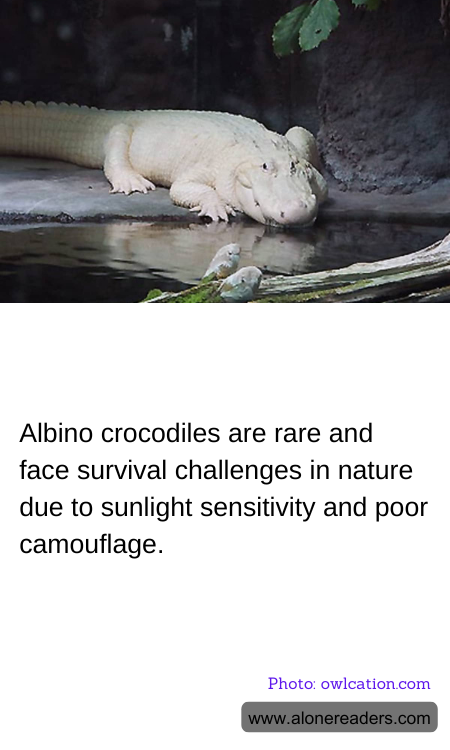
Albino crocodiles are among the rarest and most fascinating creatures in the animal kingdom. Their striking appearance, characterized by a lack of pigmentation, results in a pale, almost ghostly complexion that sets them apart from their typically camouflaged counterparts. However, this unique trait, while captivating, poses significant survival challenges in the wild.
The rarity of albino crocodiles is primarily due to the genetic mutation that causes albinism, which is uncommon in crocodilian populations. This mutation affects the production of melanin, the pigment responsible for coloration in the skin, eyes, and scales. As a result, albino crocodiles have a distinct white or yellowish appearance and pinkish eyes, making them highly visible in their natural habitats. This lack of camouflage is a significant disadvantage, as it makes them more vulnerable to predators and less effective hunters.
In addition to their conspicuous appearance, albino crocodiles face another formidable challenge: sensitivity to sunlight. The absence of melanin not only affects their coloration but also leaves them without the natural protection against the sun's harmful ultraviolet rays. Prolonged exposure can lead to severe sunburns and even skin damage, which can be detrimental to their health and survival. This sensitivity forces albino crocodiles to seek shade more frequently than their pigmented peers, limiting their ability to bask in the sun, which is essential for regulating their body temperature and aiding digestion.
The combination of poor camouflage and sunlight sensitivity significantly reduces the chances of survival for albino crocodiles in the wild. Their visibility makes them easy targets for predators, while their need to avoid direct sunlight can hinder their ability to hunt and thrive. Consequently, very few albino crocodiles reach adulthood, and those that do often face ongoing challenges in maintaining their health and safety.
Despite these challenges, albino crocodiles have captured the fascination of people around the world. They are often seen in zoos and wildlife sanctuaries, where they can be protected from the harsh realities of the wild. In these controlled environments, albino crocodiles can live longer, healthier lives, free from the threats posed by predators and the sun. These sanctuaries also provide an opportunity for researchers to study these rare creatures, gaining insights into their biology and behavior.
In conclusion, while albino crocodiles are a rare and mesmerizing sight, their survival in the wild is fraught with challenges. Their unique appearance, while beautiful, comes with significant disadvantages that make life in nature difficult. Through conservation efforts and the protection offered by wildlife sanctuaries, these extraordinary animals can continue to captivate and educate future generations, highlighting the delicate balance of nature and the importance of preserving biodiversity.