More About This Card
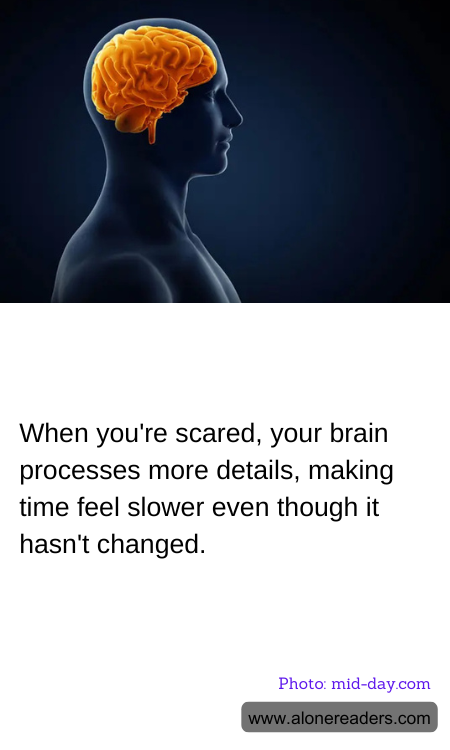
Have you ever noticed how time seems to stretch out during moments of fear or anxiety? Whether it's the seconds ticking by as you wait for important news or the heart-pounding moments of a thrilling roller coaster ride, these experiences often feel much longer than they actually are. This intriguing phenomenon is not just a trick of the mind but a fascinating aspect of how our brains process information when we're scared.
When we encounter a threatening situation, our brain kicks into high gear, activating the amygdala, a small almond-shaped cluster of nuclei located deep within the temporal lobes. This part of the brain is crucial for processing emotions, especially fear. In moments of danger, the amygdala sends signals that heighten our senses and increase our awareness of the environment. This heightened state of alertness allows us to process more details than we typically would, as our brain works overtime to assess potential threats and decide on the best course of action.
This increased processing of information can make time feel as though it is moving more slowly. Essentially, our brain is taking in more data per unit of time, creating the illusion that time has expanded. This is why a few seconds of free fall during a bungee jump can feel like an eternity, or why a suspenseful scene in a movie seems to stretch on forever. Our brains are absorbing every detail, from the sights and sounds to the physical sensations, making the experience feel richer and more prolonged.
Interestingly, this time distortion is not just a quirk of human perception but an evolutionary advantage. By slowing down our perception of time, our brains give us a better chance to react to threats, increasing our chances of survival. This mechanism would have been particularly useful for our ancestors, who needed to respond quickly to predators or other dangers in their environment.
While this time dilation effect is most pronounced during moments of acute fear, it can also occur in less intense situations, such as when we're anxious or stressed. The brain's ability to process more information can be both a blessing and a curse. On one hand, it allows us to be more vigilant and responsive. On the other hand, it can make stressful situations feel interminable, adding to our discomfort.
Understanding this phenomenon can help us better manage our reactions to fear and anxiety. By recognizing that our perception of time is skewed, we can remind ourselves that the situation is not as prolonged as it feels. This awareness can be particularly helpful in managing anxiety and stress, allowing us to regain a sense of control over our emotions.
In conclusion, the way our brain processes information during moments of fear is a testament to its incredible adaptability and complexity. While it may make time feel slower, this mechanism is a vital part of our survival toolkit, helping us navigate the challenges and dangers of the world around us.