More About This Card
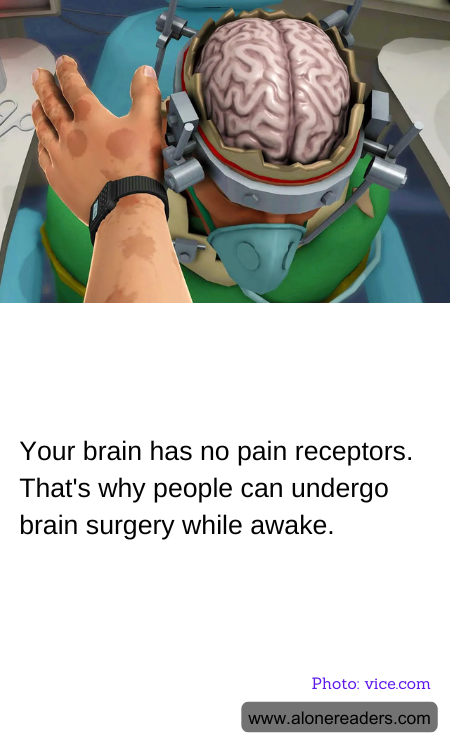
The human brain is a marvel of biological engineering, responsible for controlling every thought, movement, and sensation we experience. Yet, despite its critical role in our perception of pain, the brain itself is devoid of pain receptors. This fascinating fact is the reason why patients can undergo brain surgery while fully awake, a procedure that might sound daunting but is actually quite common and beneficial in certain medical scenarios.
Pain receptors, known as nociceptors, are specialized nerve endings that detect harmful stimuli and send pain signals to the brain. These receptors are found throughout the body, including the skin, muscles, and internal organs, alerting us to potential injury or damage. However, the brain lacks these receptors, meaning it cannot feel pain. This absence of pain perception is why neurosurgeons can perform procedures on the brain without causing discomfort to the patient.
Awake brain surgery, or awake craniotomy, is a technique used to treat various neurological conditions, such as brain tumors or epilepsy. During the procedure, the patient is kept conscious and responsive, allowing surgeons to monitor brain function in real-time. This approach is particularly useful when operating near areas of the brain responsible for critical functions like speech, movement, or vision. By interacting with the patient during surgery, doctors can ensure these vital areas are not inadvertently damaged, thereby preserving the patient's quality of life.
The process begins with the administration of local anesthesia to numb the scalp, ensuring the patient feels no pain when the skull is opened. Once the brain is exposed, the patient is gently awakened and engaged in simple tasks, such as speaking or moving a limb. This interaction helps the surgical team map the brain's functional areas, guiding them to avoid critical regions while removing diseased tissue.
While the idea of being awake during surgery might seem unsettling, patients typically report feeling comfortable and at ease. The medical team provides constant support, and the brain's lack of pain receptors means the patient experiences no pain from the procedure itself. Moreover, the benefits of awake brain surgery are significant, offering improved surgical precision and better outcomes for patients with complex neurological conditions.
In conclusion, the absence of pain receptors in the brain is a unique and advantageous feature that allows for advanced surgical techniques like awake craniotomy. This approach not only enhances the safety and effectiveness of brain surgery but also underscores the incredible complexity and adaptability of the human body. As medical science continues to evolve, our understanding of the brain and its capabilities will undoubtedly lead to even more innovative treatments, improving the lives of countless individuals worldwide.