More About This Card
In the fascinating world of insects, the giant water bug stands out not only for its size but also for its remarkable parenting behavior. Known scientifically as members of the family Belostomatidae, these aquatic insects are often referred to as "toe-biters" due to their painful bite. However, beyond their intimidating appearance and defensive capabilities lies a story of dedication and sacrifice that is both surprising and endearing.
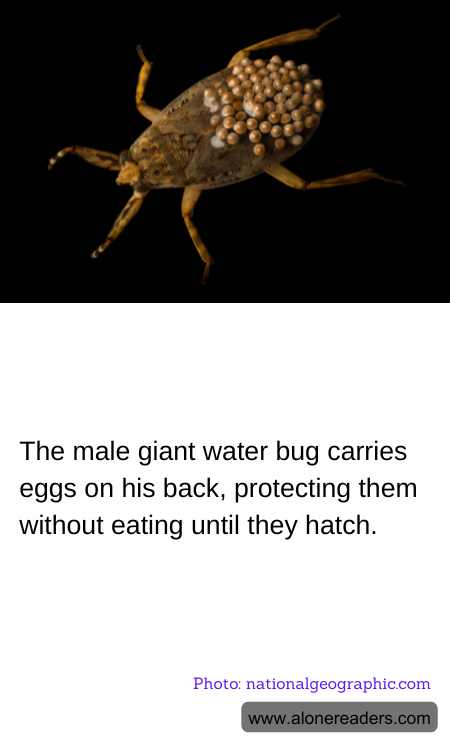
The male giant water bug plays a unique role in the reproductive process, one that is rarely observed in the insect kingdom. After mating, the female lays her eggs on the back of the male, a practice that ensures the eggs are kept safe and well-oxygenated. This unusual form of parental care is crucial for the survival of the offspring. The male's back, equipped with a specialized surface, provides a secure and aerated environment for the eggs, which can number in the dozens.
Once the eggs are securely attached, the male embarks on a period of vigilant protection. During this time, he refrains from eating, dedicating his energy and attention solely to the safety and development of the eggs. This fasting period can last several weeks, a testament to the male's commitment to his future progeny. The male's sacrifice ensures that the eggs remain undisturbed and are less likely to fall prey to predators or environmental hazards.
The male giant water bug's dedication does not end with simply carrying the eggs. He actively engages in behaviors that promote the health and development of the embryos. By periodically exposing the eggs to air, he ensures they receive adequate oxygen, a critical factor for their development. This behavior, known as brooding, involves the male periodically leaving the water to allow the eggs to breathe, a process that is vital for their successful hatching.
As the eggs near the end of their developmental cycle, the male's vigilance pays off. The young bugs, known as nymphs, emerge fully formed and ready to begin their independent lives. The male's role in their survival is complete, having provided them with the best possible start in life. This extraordinary example of paternal care highlights the diverse and often surprising strategies employed by nature to ensure the continuation of species.
The giant water bug's story is a reminder of the intricate and varied ways in which life on Earth adapts to the challenges of survival. It challenges our perceptions of parental roles in the animal kingdom and underscores the importance of both maternal and paternal contributions to the next generation. For those who take the time to observe, the giant water bug offers a glimpse into the wonders of nature and the enduring power of parental love.