More About This Card
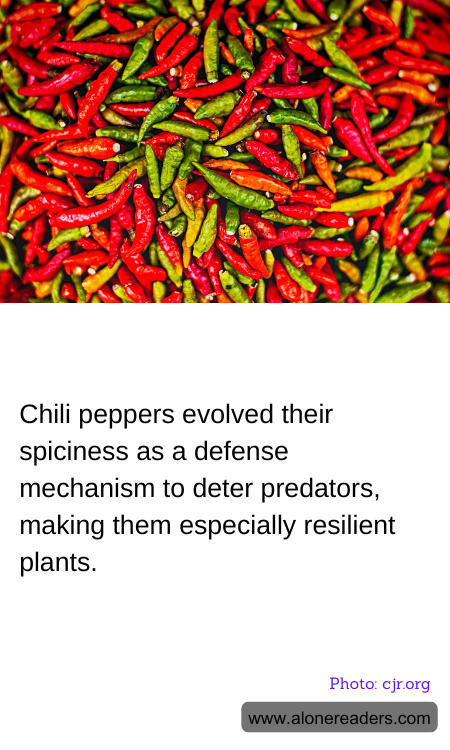
Chili peppers, with their fiery heat, have long intrigued both culinary enthusiasts and scientists alike. While many enjoy the thrill of their spiciness in dishes, the evolutionary journey of chili peppers reveals a fascinating story of survival and adaptation. The spiciness of chili peppers is not merely a culinary delight but a sophisticated defense mechanism that has allowed these plants to thrive in diverse environments.
The primary compound responsible for the heat in chili peppers is capsaicin. This chemical is an irritant to mammals, causing a burning sensation when it comes into contact with tissues. From an evolutionary perspective, this spiciness serves as a deterrent to certain predators, particularly mammals, who might otherwise consume the fruits and damage the seeds. By discouraging mammals from eating them, chili peppers increase their chances of successful seed dispersal and propagation. Birds, on the other hand, are unaffected by capsaicin and play a crucial role in spreading the seeds over wide areas, aiding in the plant's proliferation.
This evolutionary strategy highlights the resilience of chili peppers. By developing a mechanism to selectively deter certain predators while encouraging others, chili peppers have carved out a niche that allows them to flourish. The ability to ward off mammals while relying on birds for seed dispersal demonstrates a remarkable balance in nature, showcasing how plants can adapt to their environments to ensure survival and reproduction.
Moreover, the spiciness of chili peppers has contributed to their resilience in other ways. Capsaicin has antimicrobial properties, which help protect the plant from fungal infections and other pathogens. This natural defense further enhances the plant's ability to survive in various climates and conditions, making chili peppers particularly hardy and adaptable.
The human fascination with chili peppers has also played a role in their widespread cultivation and diversity. Over centuries, humans have selectively bred chili peppers for varying levels of heat, colors, and flavors, leading to the vast array of varieties available today. This human intervention has not only expanded the geographical range of chili peppers but also contributed to their genetic diversity, further bolstering their resilience.
In essence, the spiciness of chili peppers is a testament to the intricate dance of evolution and adaptation. What began as a defense mechanism against predators has evolved into a trait that has captured the hearts and taste buds of people worldwide. As we continue to explore and enjoy the diverse flavors of chili peppers, we are reminded of the remarkable ways in which nature adapts and thrives, turning challenges into opportunities for growth and survival.