More About This Card
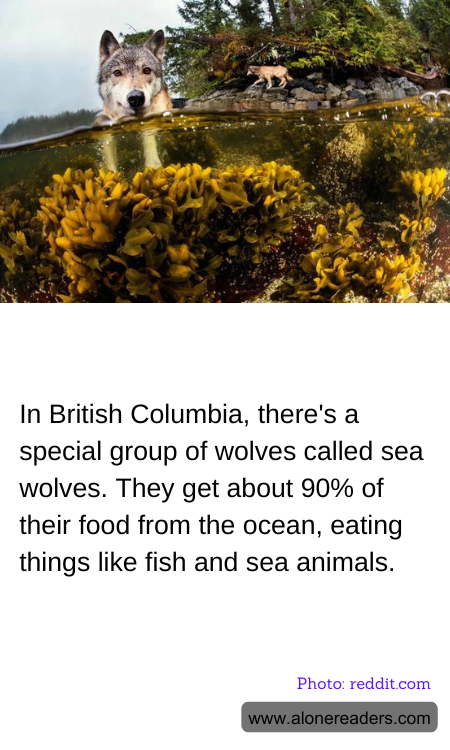
In the lush, temperate rainforests of British Columbia, a unique group of wolves has adapted to a life that is intricately tied to the ocean. Known as sea wolves, these remarkable creatures have carved out a niche that sets them apart from their inland counterparts. Unlike the typical image of wolves hunting in packs across vast stretches of land, sea wolves have developed a lifestyle that revolves around the bountiful resources of the coastal waters.
Sea wolves are a testament to the adaptability and resilience of wildlife. Approximately 90% of their diet comes from the ocean, a fact that underscores their dependence on marine ecosystems. These wolves have become adept at hunting and scavenging along the rugged coastline, where they feast on a variety of sea creatures. Their diet includes fish, such as salmon, which are abundant during spawning seasons, as well as other marine animals like seals and sea otters. This reliance on the ocean for sustenance is a rare trait among wolves, making the sea wolves of British Columbia a fascinating subject of study for scientists and nature enthusiasts alike.
The coastal environment of British Columbia provides a rich and diverse habitat that supports the sea wolves' unique lifestyle. The dense forests and rocky shores offer ample opportunities for these wolves to hunt and forage. They have been observed swimming between islands and traversing tidal zones, showcasing their remarkable swimming abilities. This adaptability not only highlights their physical prowess but also their intelligence in exploiting the resources available to them.
The existence of sea wolves is a reminder of the interconnectedness of ecosystems. Their reliance on marine life links them directly to the health of the ocean and its inhabitants. As such, they serve as an indicator species, reflecting the overall well-being of the coastal environment. Conservation efforts aimed at protecting these wolves are crucial, not only for their survival but also for maintaining the delicate balance of the ecosystems they inhabit.
Sea wolves have captured the imagination of people around the world, drawing attention to the unique biodiversity of British Columbia. Their story is one of adaptation and survival, illustrating the incredible ways in which wildlife can evolve to thrive in diverse environments. For those fortunate enough to witness these wolves in their natural habitat, it is an experience that underscores the beauty and complexity of nature.
In a world where many species are struggling to adapt to rapidly changing environments, the sea wolves of British Columbia offer a glimmer of hope. They remind us of the importance of preserving natural habitats and the intricate web of life that depends on them. As we continue to learn more about these extraordinary animals, they inspire a deeper appreciation for the wonders of the natural world and the need to protect it for future generations.