More About This Card
In the realm of medical imaging, both CT scans and X-rays play pivotal roles in diagnosing a wide array of conditions. However, one significant difference between these two diagnostic tools is the level of radiation exposure they entail. Understanding this difference is crucial for patients and healthcare providers alike, as it can influence decisions regarding the most appropriate imaging technique for a given situation.
A CT scan, or computed tomography scan, is a sophisticated imaging technique that combines a series of X-ray images taken from different angles around the body. These images are processed by a computer to create cross-sectional views of bones, blood vessels, and soft tissues. This detailed imaging is invaluable for diagnosing complex conditions, planning medical treatments, and guiding procedures. However, the comprehensive nature of CT scans comes with a trade-off: significantly higher radiation exposure compared to a standard X-ray.
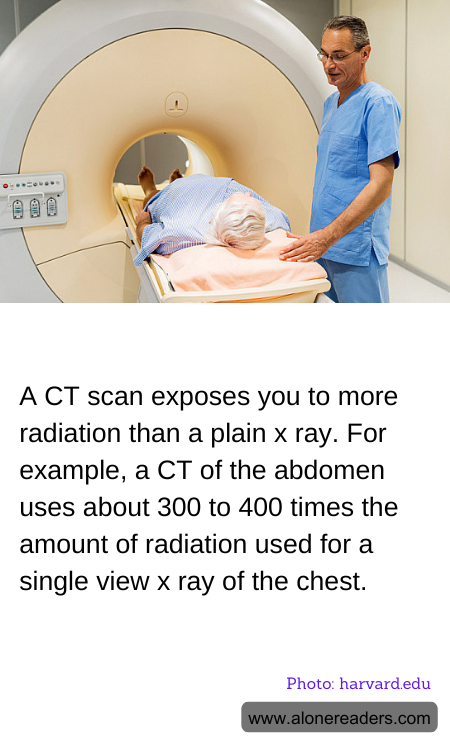
To put this into perspective, a CT scan of the abdomen can expose a patient to 300 to 400 times the amount of radiation used in a single-view chest X-ray. While a chest X-ray typically involves a minimal dose of radiation, sufficient for capturing a basic image of the chest area, a CT scan requires much more to produce its detailed, layered images. This increased exposure is necessary to achieve the clarity and depth that make CT scans so diagnostically valuable.
The higher radiation dose associated with CT scans raises important considerations, particularly regarding the potential long-term risks. While the immediate benefits of accurate diagnosis and treatment planning often outweigh these risks, it is essential to use CT scans judiciously. Healthcare providers are trained to weigh the necessity of a CT scan against its potential risks, ensuring that it is only used when the benefits clearly justify the exposure.
For patients, understanding the differences in radiation exposure can help in making informed decisions about their healthcare. It is always advisable to discuss any concerns with a healthcare provider, who can explain the rationale for choosing a CT scan over other imaging methods. In some cases, alternative imaging techniques such as ultrasound or MRI, which do not involve ionizing radiation, may be considered.
In conclusion, while CT scans are a powerful tool in modern medicine, their use must be balanced with an awareness of the increased radiation exposure they entail. By understanding the differences between CT scans and X-rays, patients can engage in informed discussions with their healthcare providers, ensuring that their diagnostic imaging is both safe and effective.