More About This Card
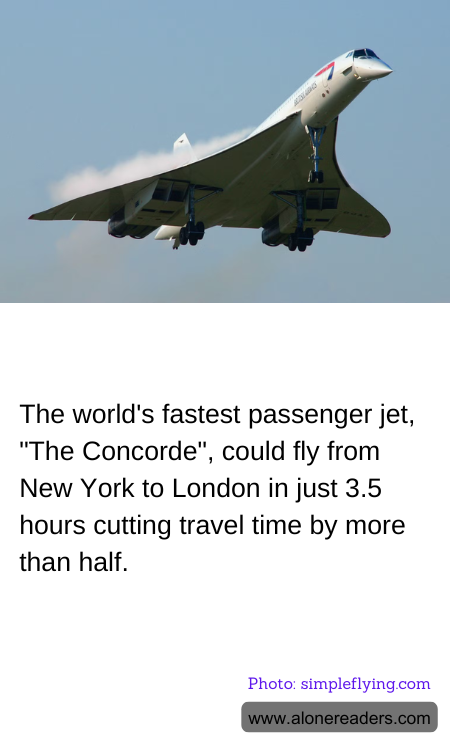
In the annals of aviation history, few aircraft have captured the imagination and admiration of the public quite like the Concorde. This supersonic passenger jet, a marvel of engineering and design, was capable of flying from New York to London in a mere 3.5 hours, effectively cutting travel time by more than half compared to conventional aircraft. The Concorde was not just a mode of transportation; it was a symbol of human ingenuity and the relentless pursuit of speed.
The Concorde's journey began in the 1960s as a joint venture between British and French aerospace companies. It was designed to travel at speeds exceeding Mach 2, more than twice the speed of sound. This remarkable feat was achieved through a combination of advanced aerodynamics, powerful engines, and cutting-edge materials. The aircraft's sleek, delta-wing design and slender fuselage were not just aesthetically pleasing but also crucial to its ability to slice through the air at supersonic speeds.
For passengers, flying on the Concorde was an experience like no other. The aircraft cruised at an altitude of 60,000 feet, allowing travelers to see the curvature of the Earth and the deep blue of the stratosphere. Inside, the cabin was luxurious, with spacious seating and gourmet meals served on fine china. Despite the high speeds, the ride was smooth, and the noise levels were surprisingly low, thanks to the innovative design of the engines and airframe.
However, the Concorde's reign as the world's fastest passenger jet was not without challenges. The high cost of development and operation, coupled with environmental concerns and noise regulations, meant that only a select few could afford the luxury of supersonic travel. Additionally, the tragic crash of Air France Flight 4590 in 2000 cast a shadow over the Concorde's legacy, leading to its eventual retirement in 2003.
Despite its relatively short service life, the Concorde left an indelible mark on the aviation industry. It demonstrated the possibilities of supersonic travel and inspired a new generation of engineers and designers to push the boundaries of what is possible. Today, as technology continues to advance, there is renewed interest in developing new supersonic passenger jets that could once again make high-speed travel a reality.
The Concorde remains a testament to human ambition and the desire to connect the world more quickly and efficiently. Its legacy lives on in the dreams of those who long for the day when crossing the Atlantic in just a few hours is once again a possibility. As we look to the future, the spirit of the Concorde continues to inspire innovation and the pursuit of excellence in aviation.