More About This Card
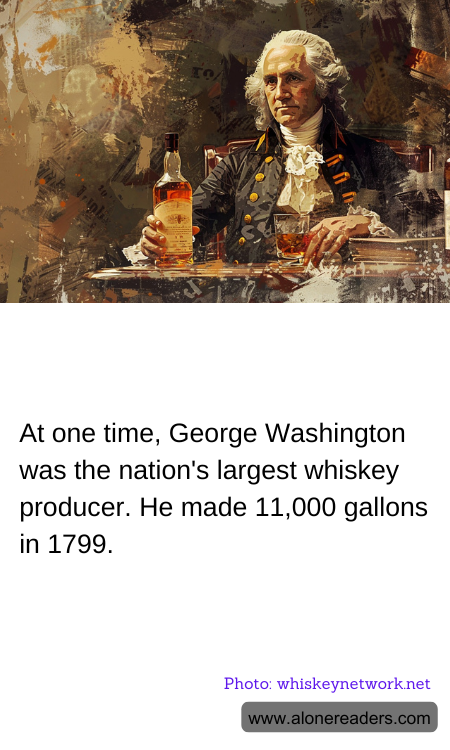
George Washington, widely celebrated as the first President of the United States and a pivotal figure in the nation's founding, also holds a lesser-known distinction: he was once the largest whiskey producer in the country. This intriguing chapter of Washington's life unfolded at his Mount Vernon estate in Virginia, where he ventured into the whiskey business in the late 18th century. By 1799, the year of his death, Washington's distillery was producing an impressive 11,000 gallons of whiskey, making it one of the most successful operations of its kind in America.
Washington's foray into whiskey production began in 1797, when his Scottish farm manager, James Anderson, proposed the idea. Anderson, who had experience in distilling, convinced Washington that the venture could be highly profitable. At the time, whiskey was a popular commodity, and the demand for it was steadily increasing. Washington, always keen on expanding his agricultural enterprises, saw the potential in Anderson's proposal and agreed to invest in the distillery.
The distillery at Mount Vernon was strategically located near the Potomac River, providing easy access to transportation routes for distributing the whiskey. Washington's operation was extensive, employing six stills and a workforce that included skilled distillers and laborers. The production process involved converting surplus grain from his plantation into whiskey, which was then sold locally and beyond. The venture proved to be highly successful, contributing significantly to Washington's wealth in his later years.
Washington's whiskey was known for its quality, and his distillery quickly gained a reputation for producing a superior product. The whiskey was primarily made from a mash of rye, corn, and malted barley, a recipe that appealed to the tastes of the time. The success of the distillery was a testament to Washington's business acumen and his ability to adapt to changing economic conditions.
The legacy of George Washington's whiskey production is preserved today at Mount Vernon, where the distillery has been reconstructed and operates as a historical site. Visitors can learn about the distilling process of the 18th century and gain insight into Washington's entrepreneurial spirit. This aspect of Washington's life serves as a reminder that even the most iconic figures in history had diverse interests and pursuits beyond their well-known achievements.
In reflecting on Washington's role as a whiskey producer, it becomes clear that his contributions to the early American economy were as varied as they were significant. His success in the whiskey business underscores the multifaceted nature of his legacy, which extends beyond his political and military accomplishments. Washington's distillery not only highlights his innovative spirit but also offers a fascinating glimpse into the economic landscape of early America.