More About This Card
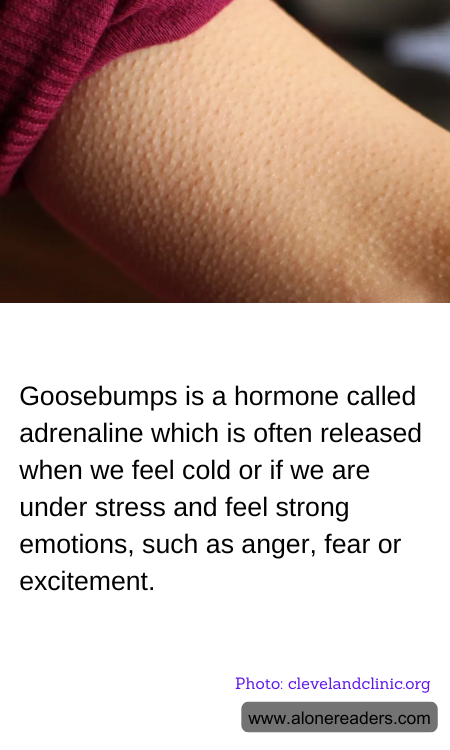
Goosebumps are a fascinating physiological response that many of us have experienced, often without giving much thought to their underlying cause. This intriguing phenomenon is primarily driven by a hormone known as adrenaline, which plays a crucial role in how our bodies react to various stimuli, particularly those related to temperature and emotional states.
Adrenaline, also known as epinephrine, is a hormone and neurotransmitter produced by the adrenal glands. It is part of the body's "fight or flight" response, a mechanism that prepares us to either confront or flee from perceived threats. When adrenaline is released into the bloodstream, it triggers a series of physiological changes. One of these changes is the contraction of tiny muscles at the base of hair follicles, causing the hairs to stand upright and resulting in the appearance of goosebumps.
This response is believed to be an evolutionary remnant from our ancestors, who had much more body hair than modern humans. When faced with cold temperatures, the raised hairs would trap a layer of air, providing additional insulation to help maintain body heat. Similarly, when experiencing strong emotions such as fear or anger, the raised hairs would make an individual appear larger and more intimidating to potential threats.
In today's world, while the practical benefits of goosebumps may be less apparent, the underlying mechanism remains the same. When we feel cold, the body releases adrenaline to help generate heat and conserve energy. This is why you might notice goosebumps forming when you step out into a chilly breeze or enter a cold room. The same hormone is also released during moments of intense emotion, whether it's the thrill of excitement, the rush of fear, or the surge of anger. These emotions can trigger the fight or flight response, leading to the familiar sensation of goosebumps.
Interestingly, goosebumps can also occur in response to certain auditory or visual stimuli, such as listening to a powerful piece of music or watching an emotionally charged scene in a movie. This phenomenon, often referred to as "aesthetic chills," highlights the complex interplay between our emotional and physiological responses.
While goosebumps may seem like a minor and inconsequential reaction, they offer a glimpse into the intricate ways our bodies are wired to respond to the world around us. Whether prompted by a drop in temperature or a surge of emotion, the appearance of goosebumps is a testament to the enduring influence of adrenaline and the fascinating legacy of our evolutionary past.