More About This Card
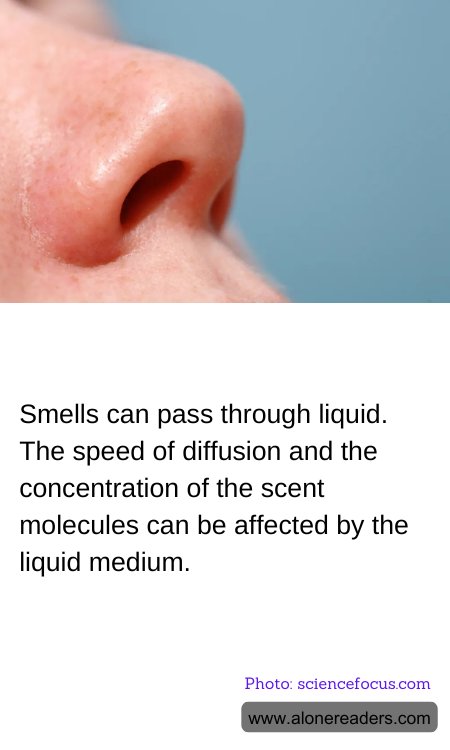
The fascinating world of scents and smells often conjures images of fragrant flowers or freshly baked bread wafting through the air. However, the journey of scent molecules is not confined to the air alone. These molecules can also traverse through liquids, a process that is both intriguing and complex. Understanding how smells pass through liquid involves exploring the science of diffusion and the factors that influence this process.
Diffusion is the movement of molecules from an area of higher concentration to an area of lower concentration. In the context of scents, this means that scent molecules spread out until they are evenly distributed within a medium, whether it be air or liquid. When it comes to liquids, the diffusion of scent molecules is influenced by several factors, including the nature of the liquid medium itself. The viscosity, temperature, and density of the liquid can all play significant roles in determining how quickly and effectively scent molecules spread.
For instance, in a less viscous liquid like water, scent molecules can move more freely, allowing for faster diffusion. Conversely, in a more viscous liquid, such as oil, the movement of molecules is slower, which can impede the diffusion process. Temperature also plays a crucial role; higher temperatures generally increase the kinetic energy of molecules, thereby accelerating diffusion. This is why a warm cup of tea might release its aroma more quickly than a cold one.
The concentration of the scent molecules is another critical factor. A higher concentration of scent molecules will typically result in a stronger and more noticeable smell. However, as these molecules diffuse through the liquid, their concentration decreases, which can lead to a gradual weakening of the scent. This is why a perfume might smell potent when first applied but becomes subtler over time as the scent molecules disperse.
The interaction between scent molecules and the liquid medium can also affect how we perceive smells. Some liquids may enhance certain aspects of a scent, while others might mask or alter it. This is particularly relevant in industries such as perfumery and food and beverage, where the interaction between scents and liquids is carefully managed to achieve the desired sensory experience.
In conclusion, the diffusion of smells through liquids is a dynamic process influenced by the properties of the liquid medium and the concentration of scent molecules. This phenomenon not only enriches our understanding of how scents travel but also highlights the intricate interplay between chemistry and our sensory experiences. Whether it's the aroma of a hot soup or the fragrance of a bath oil, the journey of scent molecules through liquid is a testament to the complexity and beauty of the natural world.