More About This Card
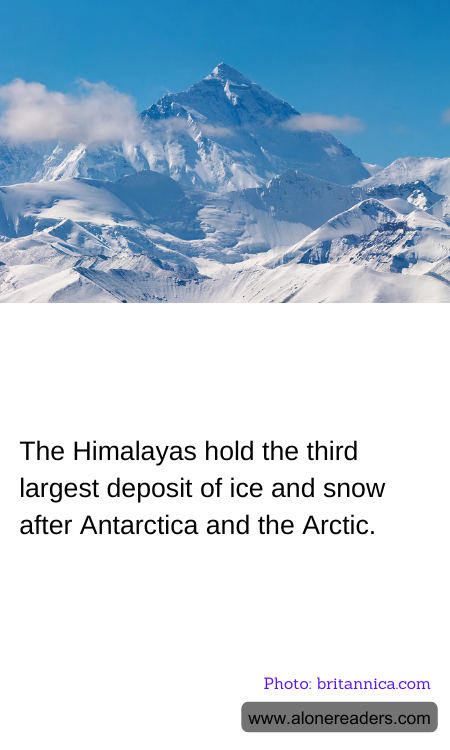
The Himalayas, often referred to as the "Third Pole," are a majestic mountain range that stretches across five countries: Bhutan, India, Nepal, China, and Pakistan. This awe-inspiring natural wonder is not only renowned for its towering peaks and breathtaking landscapes but also for its crucial role in the global climate system. The Himalayas hold the third largest deposit of ice and snow in the world, following only Antarctica and the Arctic, making them a vital component of Earth's environmental balance.
The vast expanse of ice and snow in the Himalayas is primarily concentrated in its glaciers, which are the lifeblood of the region. These glaciers cover approximately 33,000 square kilometers and are the source of some of the world's major river systems, including the Ganges, Indus, Brahmaputra, and Yangtze. These rivers provide water to nearly two billion people, supporting agriculture, drinking water, and hydroelectric power. The glaciers' seasonal melting and replenishment are crucial for maintaining the flow of these rivers, especially during the dry months.
The Himalayas' icy reserves play a significant role in regulating the Earth's climate. The snow and ice reflect a substantial amount of solar radiation back into space, helping to cool the planet. This albedo effect is essential in mitigating global warming. However, the region is facing unprecedented challenges due to climate change. Rising global temperatures are causing Himalayan glaciers to retreat at an alarming rate, threatening the delicate balance of water supply and increasing the risk of glacial lake outburst floods, which can have devastating impacts on downstream communities.
The melting of Himalayan glaciers also has far-reaching implications for biodiversity. The region is home to a unique array of flora and fauna, many of which are adapted to cold environments. As temperatures rise and habitats change, these species face the threat of extinction. Conservation efforts are crucial to preserving this rich biodiversity and maintaining the ecological integrity of the Himalayas.
Efforts to address the challenges facing the Himalayas require international cooperation and sustainable development practices. Countries in the region are increasingly recognizing the importance of protecting their shared natural heritage. Initiatives such as the International Centre for Integrated Mountain Development (ICIMOD) work to promote research, policy development, and capacity building to address the impacts of climate change and ensure the sustainable management of the Himalayas' resources.
The Himalayas are not just a geographical marvel but a critical component of the Earth's environmental system. Their vast deposits of ice and snow are essential for sustaining life and regulating the climate. As the world grapples with the impacts of climate change, the preservation of the Himalayas becomes ever more crucial. By understanding and addressing the challenges facing this vital region, we can work towards a more sustainable future for generations to come.