More About This Card
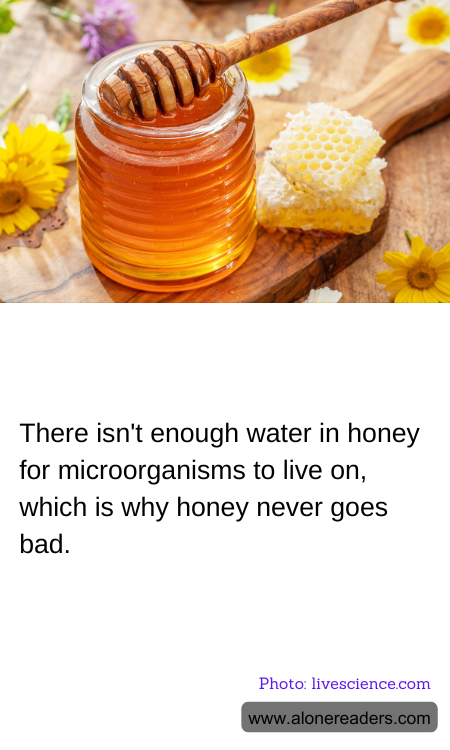
Honey, a natural sweetener cherished for its golden hue and rich flavor, has been a staple in human diets for thousands of years. One of its most fascinating attributes is its seemingly eternal shelf life. Unlike many other food products, honey does not spoil, and this remarkable longevity is primarily due to its unique composition, particularly its low water content.
The secret to honey's durability lies in its hygroscopic nature, meaning it has a low moisture content and can absorb moisture from the environment. Honey is composed of approximately 17-18% water, a level too low to support the growth of most microorganisms, including bacteria and fungi. Microorganisms require water to thrive and reproduce, and the lack of sufficient water in honey creates an inhospitable environment for them. This is why honey can remain unspoiled for centuries, as evidenced by jars of honey found in ancient Egyptian tombs that are still edible today.
In addition to its low water content, honey's high acidity further contributes to its preservation. With a pH ranging from 3.2 to 4.5, honey is acidic enough to deter the growth of many pathogens. The acidity is primarily due to the presence of gluconic acid, a byproduct of the enzymatic conversion of glucose by bees. This acidic environment, combined with the low moisture content, creates a formidable barrier against microbial invasion.
Moreover, honey contains natural compounds that enhance its antimicrobial properties. One such compound is hydrogen peroxide, which is produced when bees add an enzyme called glucose oxidase to the nectar. When honey is diluted, the enzyme activates and releases hydrogen peroxide, which acts as a mild antiseptic. This further inhibits the growth of microorganisms, ensuring that honey remains safe to consume over long periods.
While honey's natural preservation qualities are impressive, it is important to store it properly to maintain its quality. Honey should be kept in a sealed container at room temperature, away from direct sunlight and moisture. If exposed to air or moisture, honey can absorb water, potentially leading to fermentation. However, even crystallized or fermented honey is not harmful and can often be restored to its original state by gently warming it.
In conclusion, honey's ability to resist spoilage is a testament to its unique chemical composition and the intricate processes carried out by bees. Its low water content, high acidity, and natural antimicrobial compounds work in harmony to create an environment where microorganisms cannot survive. This makes honey not only a delicious and versatile food but also a marvel of natural preservation, ensuring its place in our kitchens and cultures for generations to come.