More About This Card
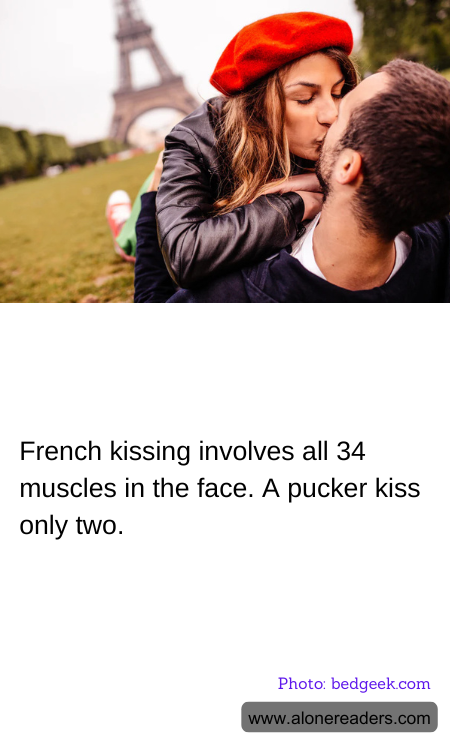
Kissing is a universal expression of affection, but not all kisses are created equal. The difference between a French kiss and a simple pucker is not just in the level of intimacy but also in the number of muscles involved. While a pucker kiss engages only two muscles, a French kiss activates a complex interplay of 34 facial muscles, making it a fascinating subject of study in both anatomy and human behavior.
The pucker kiss, often seen as a quick peck on the lips, primarily involves the orbicularis oris muscle. This muscle encircles the mouth and is responsible for the pursing of the lips. The simplicity of this gesture belies its significance, as it is often used as a greeting or a sign of affection among friends and family. Despite its simplicity, the pucker kiss is a powerful non-verbal communication tool, conveying warmth and connection without the need for words.
In contrast, the French kiss is a more intricate dance of facial muscles. It involves not only the orbicularis oris but also a host of other muscles, including the buccinator, which helps in controlling the cheeks, and the zygomaticus major and minor, which are responsible for lifting the corners of the mouth. The French kiss is a more intimate expression, often reserved for romantic partners. This type of kiss is not just about the lips; it engages the entire face, creating a more profound connection between the individuals involved.
The complexity of a French kiss can be attributed to its ability to convey a deeper level of emotion and intimacy. It is a form of communication that transcends words, allowing individuals to express feelings that might be difficult to articulate. The involvement of multiple muscles also means that a French kiss can vary greatly from one person to another, influenced by factors such as emotion, intention, and even cultural background.
Understanding the muscular dynamics of kissing can also shed light on its psychological and emotional impact. Engaging multiple muscles in a French kiss can lead to the release of endorphins, the body's natural feel-good chemicals, which can enhance mood and strengthen emotional bonds. This physiological response underscores the importance of kissing in human relationships, serving as a reminder of the power of touch and connection.
In conclusion, while a pucker kiss and a French kiss may seem like simple acts, they are underpinned by a complex interplay of muscles and emotions. Whether it's a quick peck or a lingering embrace, each type of kiss plays a unique role in human interaction, reflecting the diverse ways in which we express love and affection. Understanding the anatomy behind these gestures enriches our appreciation of their significance, reminding us of the intricate ways in which our bodies and emotions are intertwined.