More About This Card
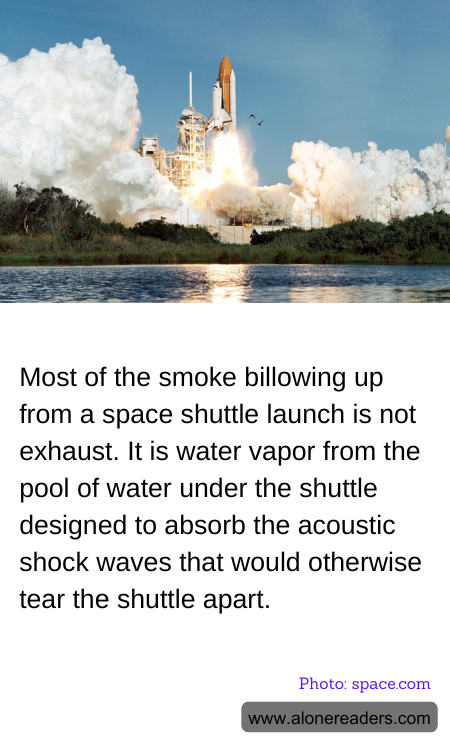
When a space shuttle launches, the dramatic spectacle of smoke billowing into the sky captivates audiences worldwide. However, contrary to popular belief, most of this smoke is not exhaust from the shuttle's engines. Instead, it is primarily water vapor, a byproduct of a sophisticated system designed to protect the shuttle from the intense acoustic shock waves generated during liftoff.
The launch of a space shuttle involves immense forces, with engines producing millions of pounds of thrust. This power is necessary to propel the shuttle beyond Earth's atmosphere, but it also creates deafening sound waves. These acoustic shock waves, if left unchecked, could cause significant structural damage to the shuttle. To mitigate this risk, engineers have devised an ingenious solution: the sound suppression water system.
Beneath the launch pad, a massive pool of water is strategically positioned. As the shuttle's engines ignite, thousands of gallons of water are rapidly pumped onto the launch pad. This water serves a dual purpose. Firstly, it acts as a coolant, absorbing the intense heat generated during liftoff. More importantly, it plays a crucial role in sound suppression. The water absorbs and dampens the acoustic energy produced by the engines, preventing the shock waves from reflecting off the ground and back onto the shuttle.
As the engines roar to life, the water is instantly vaporized by the extreme heat, creating the enormous plumes of white "smoke" that spectators see rising from the launch pad. This vapor is harmless water vapor, not the toxic exhaust one might assume. The visual effect is both awe-inspiring and a testament to the engineering marvels that make space travel possible.
This system is a vital component of shuttle launches, ensuring the safety and integrity of the spacecraft. Without it, the intense sound waves could potentially tear the shuttle apart before it even leaves the ground. The use of water vapor as a protective measure highlights the innovative solutions engineers have developed to overcome the challenges of space exploration.
In essence, the spectacle of a shuttle launch is not just a display of raw power but also a demonstration of human ingenuity. The billowing clouds of water vapor serve as a reminder of the complex interplay between technology and nature, where even the most advanced machines rely on simple elements like water to achieve extraordinary feats. As we continue to explore the cosmos, these engineering solutions will remain crucial, ensuring that each launch is as safe and successful as possible.