More About This Card
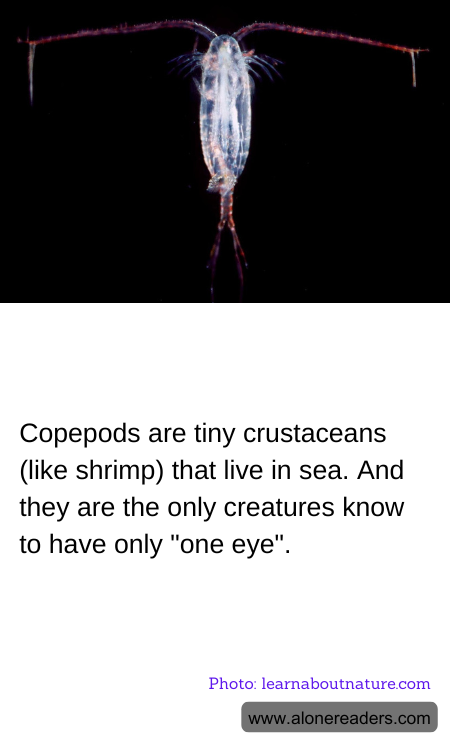
In the vast and mysterious world of the ocean, where countless creatures dwell, copepods stand out as fascinating inhabitants. These tiny crustaceans, often likened to shrimp due to their similar appearance, are remarkable not only for their abundance but also for their unique anatomical feature: they are the only known creatures to possess just one eye. This singular eye is not just a quirky trait but a vital adaptation that plays a crucial role in their survival.
Copepods are incredibly small, with most species measuring less than a millimeter in length. Despite their diminutive size, they are among the most numerous multicellular organisms on Earth, thriving in both marine and freshwater environments. Their presence is so prolific that they form a significant part of the zooplankton community, serving as a critical food source for a wide array of marine animals, including fish, whales, and seabirds. This makes them an essential component of the aquatic food web, influencing the health and balance of marine ecosystems.
The single eye of a copepod is a simple, median eye located on the top of its head. Unlike the compound eyes found in many other crustaceans, this eye is composed of a single lens, which is adept at detecting changes in light intensity. This ability is crucial for their survival, as it helps them navigate their environment, avoid predators, and locate food. The eye's simplicity is a testament to the efficiency of evolution, providing copepods with just what they need to thrive in their watery habitats.
Beyond their intriguing anatomy, copepods are also known for their incredible adaptability. They can be found in nearly every aquatic environment, from the icy waters of the Arctic to the warm tropical seas. This adaptability is partly due to their varied diet, which includes phytoplankton, detritus, and even other smaller zooplankton. Their feeding habits not only sustain them but also contribute to the cycling of nutrients within their ecosystems, highlighting their ecological importance.
In recent years, scientists have taken a keen interest in copepods, studying their role in the ocean's carbon cycle and their potential impact on climate change. As they consume phytoplankton, copepods help regulate the amount of carbon dioxide in the atmosphere, playing a part in the global carbon cycle. Understanding their behavior and population dynamics can provide valuable insights into the health of marine environments and the broader implications for our planet's climate.
In conclusion, copepods may be small, but their significance in the ocean is immense. Their unique one-eyed anatomy and their role as a keystone species in marine ecosystems make them a subject of fascination and study. As we continue to explore the depths of the ocean, these tiny crustaceans remind us of the intricate and interconnected nature of life on Earth, where even the smallest creatures can have a profound impact.