More About This Card
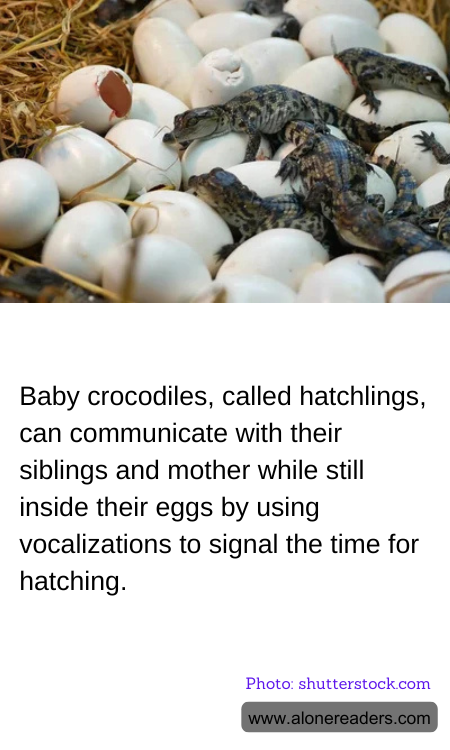
In the fascinating world of reptiles, few creatures capture the imagination quite like the crocodile. These ancient animals, with their armored bodies and powerful jaws, have long been subjects of intrigue and study. Among the many remarkable aspects of their biology is the way baby crocodiles, known as hatchlings, communicate even before they emerge into the world. While still nestled inside their eggs, these tiny reptiles engage in a form of vocal communication that signals the time for hatching, a behavior that underscores the complexity and intelligence of these prehistoric creatures.
Crocodile hatchlings begin their lives in a nest, carefully constructed by their mother. As the time for hatching approaches, these unborn reptiles start to vocalize, producing sounds that can be described as high-pitched grunts or chirps. These vocalizations serve a critical purpose: they synchronize the hatching process among siblings and alert the mother that her young are ready to emerge. This communication ensures that the hatchlings break free from their eggs simultaneously, which is crucial for their survival.
The synchronized hatching is not just a marvel of nature but a strategic adaptation. By emerging together, the hatchlings increase their chances of survival in the wild. A coordinated hatching reduces the risk of predation, as the sheer number of hatchlings can overwhelm potential predators. Additionally, the mother crocodile, alerted by the vocalizations, stands ready to assist her young. She may gently roll the eggs to help the hatchlings break free or carry them to the water, where they will begin their journey into adulthood.
This early form of communication is a testament to the intricate social behaviors of crocodiles. It highlights the importance of family bonds and the protective instincts of the mother, who remains vigilant and attentive to her offspring's needs. The vocalizations of the hatchlings are not only a signal for hatching but also a call for maternal care, ensuring that the young crocodiles receive the best possible start in life.
The study of these vocalizations has provided scientists with valuable insights into the behavior and evolution of crocodiles. It challenges the perception of reptiles as solitary and uncommunicative creatures, revealing a level of social complexity that is often overlooked. This discovery also emphasizes the importance of preserving crocodile habitats, as these environments are crucial for the continuation of such remarkable behaviors.
In conclusion, the ability of baby crocodiles to communicate with their siblings and mother while still inside their eggs is a captivating example of nature's ingenuity. It showcases the sophisticated survival strategies that have allowed crocodiles to thrive for millions of years. As we continue to learn more about these incredible animals, we gain a deeper appreciation for the delicate balance of life in the natural world and the extraordinary adaptations that sustain it.