More About This Card
Sushi, a culinary icon synonymous with Japan, has a fascinating history that traces back to Southeast Asia. While today it is celebrated as a quintessential Japanese delicacy, its origins tell a story of cultural evolution and adaptation. The journey of sushi from a method of preservation to a global gastronomic phenomenon is as intriguing as the flavors it offers.
The roots of sushi can be found in a preservation technique known as "narezushi," which emerged in Southeast Asia over a thousand years ago. This method involved fermenting fish with rice to extend its shelf life. The process was simple yet effective: fish was cleaned, salted, and then packed in rice, where it would undergo fermentation. The rice was discarded, and the fish, now preserved, could be consumed months later. This technique spread across regions, eventually making its way to Japan around the 8th century.
In Japan, the concept of narezushi was embraced and gradually transformed. By the Edo period (1603-1868), the Japanese had developed a taste for the rice itself, leading to the creation of "hayazushi." This version of sushi was less about preservation and more about flavor, as the rice was seasoned with vinegar rather than being left to ferment. This innovation marked a significant shift, as the rice became an integral part of the dish, consumed alongside the fish.
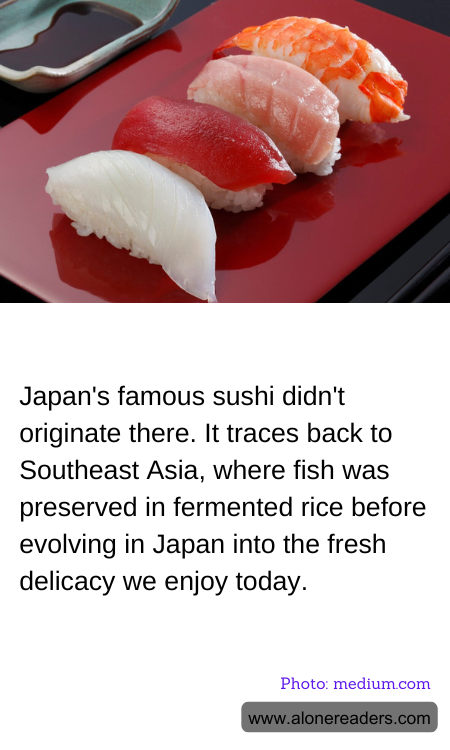
The evolution of sushi continued, and by the early 19th century, a new style emerged in Edo (modern-day Tokyo) that would revolutionize the dish. Known as "nigiri sushi," this version featured fresh fish placed atop small, hand-formed mounds of vinegared rice. This transformation was driven by the availability of fresh fish in the bustling city and the desire for a quick, convenient meal. Nigiri sushi was a departure from its fermented predecessor, emphasizing freshness and simplicity, which resonated with the fast-paced urban lifestyle.
Today, sushi is celebrated worldwide, with countless variations and styles that reflect both traditional and contemporary influences. From the delicate slices of sashimi to the creative rolls found in fusion cuisine, sushi has transcended its origins to become a symbol of culinary artistry. Yet, despite its global popularity, the essence of sushi remains rooted in its history—a testament to the ingenuity of those who first sought to preserve fish in fermented rice.
As sushi continues to evolve, it serves as a reminder of the interconnectedness of cultures and the enduring impact of culinary innovation. The journey from Southeast Asia to Japan and beyond highlights the dynamic nature of food, where tradition and creativity blend to create something truly extraordinary. Whether enjoyed in a high-end restaurant or a local sushi bar, each bite of sushi carries with it a rich legacy that spans centuries and continents.