More About This Card
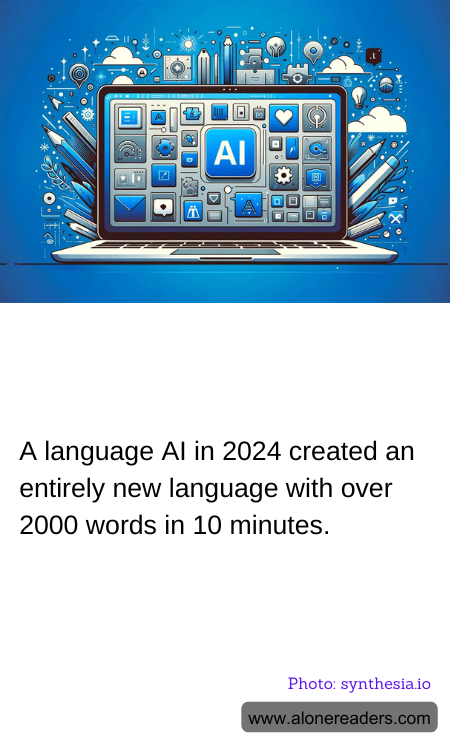
In an unprecedented leap in artificial intelligence capabilities, a language AI in 2024 has achieved the remarkable feat of creating an entirely new language with over 2,000 words in just ten minutes. This groundbreaking development has sparked widespread interest and curiosity across the globe, as it opens up new possibilities for communication, cultural exchange, and linguistic studies.
The AI, developed by a team of linguists and computer scientists, was designed to push the boundaries of language generation. Using advanced algorithms and deep learning techniques, the AI was able to analyze existing languages and synthesize a new one, complete with its own grammar, syntax, and vocabulary. The language, tentatively named "Neolingo," is not only a testament to the power of modern technology but also a fascinating exploration into the nature of language itself.
Neolingo's creation process involved the AI drawing from a vast database of human languages, identifying common linguistic patterns, and then innovating upon them to form a cohesive and functional language. The AI's ability to generate such a complex system in a matter of minutes highlights the rapid advancements in computational power and machine learning. This achievement raises intriguing questions about the future role of AI in language development and its potential applications in various fields.
One of the most exciting prospects of Neolingo is its potential use in international communication. As a language created by AI, it is free from cultural biases and historical baggage, offering a neutral medium for global discourse. This could pave the way for more inclusive and equitable communication across different cultures and nations. Additionally, Neolingo could serve as a valuable tool in education, providing a unique opportunity for students to engage with a new linguistic system and enhance their cognitive skills.
However, the creation of Neolingo also presents challenges and ethical considerations. The rapid development of such a language raises questions about the preservation of existing languages and cultural identities. Linguists and cultural experts emphasize the importance of balancing technological innovation with respect for linguistic diversity and heritage. As AI continues to evolve, it is crucial to ensure that its advancements are harnessed responsibly and ethically.
In conclusion, the creation of Neolingo by a language AI in 2024 marks a significant milestone in the field of artificial intelligence and linguistics. While it offers exciting possibilities for communication and education, it also prompts important discussions about the implications of AI-generated languages. As we navigate this new frontier, it is essential to approach these developments with a thoughtful and balanced perspective, ensuring that technology serves to enrich and enhance human experience rather than diminish it.