More About This Card
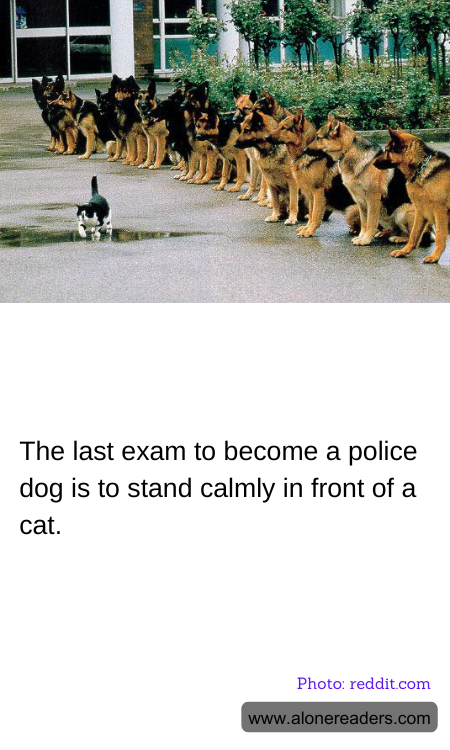
In the world of law enforcement, the role of police dogs is both crucial and multifaceted. These highly trained canines are tasked with duties ranging from detecting narcotics and explosives to tracking missing persons and apprehending suspects. However, one of the lesser-known yet equally important tests in their rigorous training regimen is the ability to remain calm in the presence of a cat.
At first glance, this requirement may seem trivial or even humorous, but it serves a significant purpose. Police dogs must be able to maintain composure in a variety of unpredictable situations. The presence of a cat, with its erratic movements and potential to provoke a chase instinct, is an excellent test of a dog's discipline and focus. This final exam is not just about resisting the urge to chase; it is about demonstrating the ability to prioritize commands over instinctual behavior.
The training process for police dogs is intense and comprehensive. It begins with basic obedience and progresses to more complex tasks, such as scent detection and suspect apprehension. Throughout this journey, trainers emphasize the importance of self-control and the ability to remain calm under pressure. The cat test is the culmination of this training, a final hurdle that ensures the dog can perform its duties without being distracted by common environmental factors.
For many trainers, the cat test is a moment of pride and reflection. It signifies the end of a long journey and the beginning of a new chapter for the dog as a certified member of the police force. Successfully passing this test indicates that the dog has not only mastered the technical skills required but also possesses the temperament necessary for the job.
This exam also highlights the importance of adaptability in police work. Officers, both human and canine, must be prepared to face unexpected challenges. By exposing police dogs to a variety of scenarios, including the presence of a cat, trainers ensure that these animals are ready for the unpredictable nature of real-world situations.
In conclusion, the last exam to become a police dog—standing calmly in front of a cat—may seem like a simple task, but it is a vital component of their training. It encapsulates the essence of what it means to be a police dog: disciplined, focused, and ready to serve. As these dogs graduate from their training programs, they carry with them the skills and composure needed to support their human counterparts in maintaining public safety. This final test is a testament to their readiness and a reminder of the dedication required to become a trusted member of the police force.