More About This Card
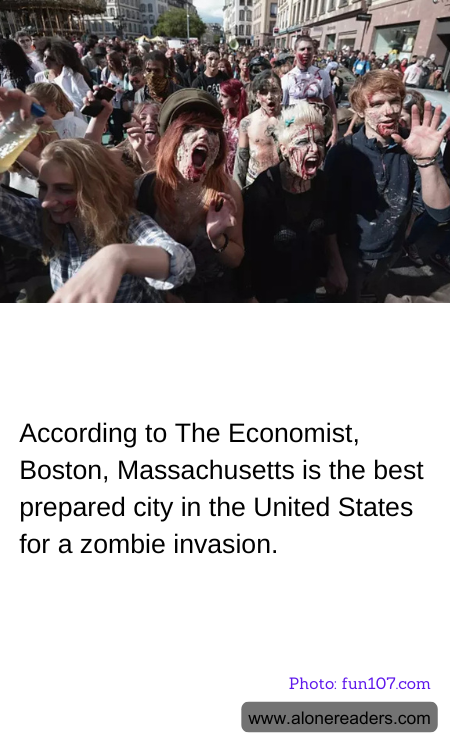
In a world where the unexpected often becomes reality, the idea of a zombie invasion might seem far-fetched, yet it has captured the imagination of many. According to The Economist, if such an event were to occur, Boston, Massachusetts, stands out as the best-prepared city in the United States to handle the challenge. This intriguing assertion invites us to explore the unique qualities that make Boston a formidable fortress against the undead.
Boston's preparedness can be attributed to a combination of its historical infrastructure, robust public health systems, and a strong sense of community resilience. The city's layout, with its narrow streets and historic buildings, could serve as natural barriers against a slow-moving zombie horde. These architectural features, while sometimes challenging for modern transportation, could prove advantageous in controlling and containing any potential outbreak.
Moreover, Boston is home to some of the nation's leading medical and research institutions, including Harvard University and the Massachusetts Institute of Technology. These institutions are not only centers of innovation but also hubs for emergency preparedness and response. In the event of a zombie invasion, the city's access to cutting-edge research and medical expertise would be invaluable in developing strategies to combat the threat and possibly find a cure.
Public health infrastructure in Boston is another critical factor in its readiness. The city has a well-established network of hospitals and emergency services that are adept at handling crises. This infrastructure ensures that Boston can quickly mobilize resources and provide care to its citizens, a crucial capability in any emergency scenario. The city's experience in managing public health challenges, such as the COVID-19 pandemic, has further strengthened its ability to respond effectively to unforeseen events.
Community resilience is another cornerstone of Boston's preparedness. The city's residents are known for their strong sense of community and willingness to come together in times of need. This collective spirit would be essential in organizing neighborhood watch groups, sharing resources, and supporting one another during a crisis. The city's numerous community organizations and volunteer networks would play a pivotal role in coordinating efforts and maintaining morale.
While the notion of a zombie invasion remains firmly in the realm of fiction, the factors that make Boston well-prepared for such an event are very real. The city's combination of historical infrastructure, medical expertise, public health systems, and community resilience creates a robust framework for handling emergencies of all kinds. Whether facing a fictional zombie apocalypse or real-world challenges, Boston's readiness serves as a model for other cities aiming to enhance their own preparedness strategies.