More About This Card
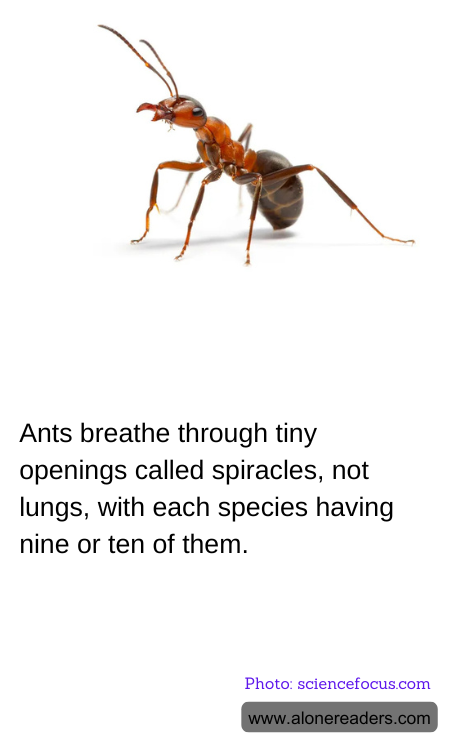
Ants are fascinating creatures that have intrigued scientists and nature enthusiasts alike for centuries. One of the most intriguing aspects of their biology is how they breathe. Unlike humans and many other animals that rely on lungs to take in oxygen, ants have a unique respiratory system that operates through tiny openings called spiracles. These spiracles are small holes located along the sides of an ant's body, and they play a crucial role in the ant's ability to survive and thrive in various environments.
Each species of ant typically has nine or ten spiracles, which are strategically placed to ensure efficient gas exchange. These openings connect to a network of tubes known as tracheae, which distribute oxygen directly to the ant's tissues and organs. This system allows ants to breathe without the need for lungs, making their respiratory process quite different from that of mammals. The tracheal system is highly efficient, allowing ants to meet their oxygen needs even during periods of high activity.
The spiracles can open and close, which helps ants regulate their oxygen intake and minimize water loss. This is particularly important for ants living in arid environments, where conserving moisture is essential for survival. By controlling the opening and closing of their spiracles, ants can adapt to changing environmental conditions, ensuring they maintain the right balance of oxygen and moisture.
The simplicity and efficiency of the ant's respiratory system are a testament to the wonders of evolution. It allows these tiny insects to inhabit a wide range of habitats, from tropical rainforests to deserts. The ability to breathe through spiracles has contributed to the ants' success as one of the most widespread and diverse groups of insects on the planet.
Understanding how ants breathe not only provides insight into their biology but also highlights the incredible diversity of life on Earth. It serves as a reminder of the many different ways organisms have adapted to their environments over millions of years. For those interested in the natural world, the study of ants and their unique respiratory system offers a glimpse into the intricate and often surprising mechanisms that sustain life.