More About This Card
In the annals of history, the election of Pope Fabian stands out as a remarkable tale of divine intervention and unexpected leadership. Born in the early 3rd century, Fabian was a humble layman who journeyed to Rome from his native land, likely with no aspirations of ascending to the papacy. However, his life took an extraordinary turn during a pivotal moment in the history of the early Christian Church.
The story of Fabian's rise to the papacy is steeped in legend and faith. As the narrative goes, Fabian arrived in Rome during a time when the Christian community was in the process of selecting a new pope. The previous pope, Anterus, had passed away, and the clergy and laity were gathered to elect his successor. Fabian, an outsider and unknown to the Roman congregation, was present among the crowd, perhaps out of curiosity or devotion.
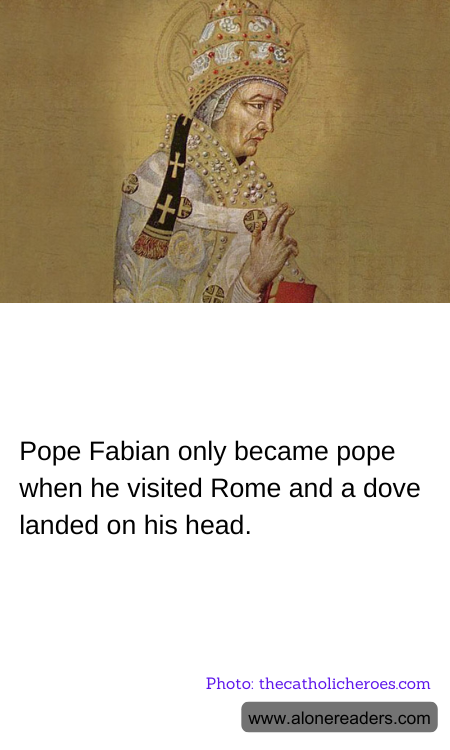
During the election process, a dove, symbolizing the Holy Spirit, descended from the heavens and alighted upon Fabian's head. This miraculous event was interpreted by those present as a divine sign, indicating that Fabian was chosen by God to lead the Church. The assembly, moved by this extraordinary occurrence, unanimously elected him as the new Bishop of Rome. Thus, Fabian became pope, not through ambition or clerical rank, but through what was perceived as a heavenly endorsement.
Pope Fabian's papacy, which lasted from 236 to 250 AD, was marked by significant contributions to the early Church. Despite his unexpected rise to leadership, he proved to be a capable and effective pope. Fabian is credited with organizing the Church's structure, dividing Rome into parishes, and appointing deacons to assist with the administration of the growing Christian community. He also played a crucial role in the development of the Church's hierarchy and the establishment of a system for recording the acts of martyrs, which helped preserve the history and legacy of early Christian saints.
Fabian's tenure as pope was not without challenges. He led the Church during a period of relative peace, but his papacy ended amidst the persecution of Christians under Emperor Decius. Fabian himself became a martyr, dying in 250 AD, and was later venerated as a saint. His legacy endures as a testament to the belief in divine guidance and the power of faith to elevate the humble to positions of great responsibility.
The story of Pope Fabian serves as a reminder of the mysterious ways in which leadership can manifest and the profound impact that faith and divine signs can have on the course of history. His papacy is celebrated not only for its administrative achievements but also for the miraculous circumstances of his election, which continue to inspire believers around the world.