More About This Card
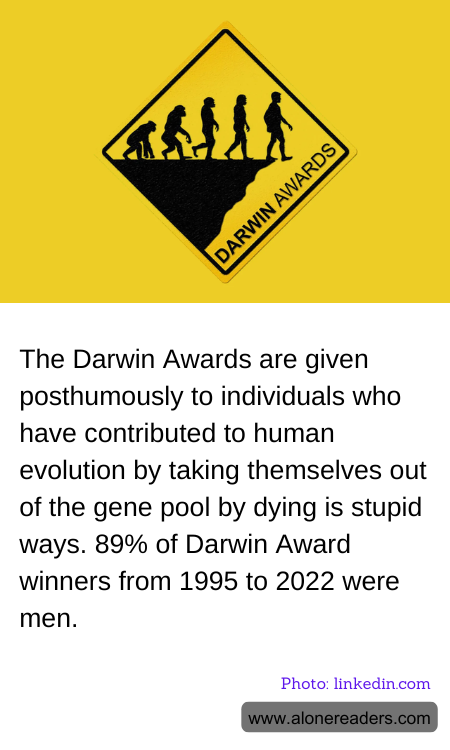
The Darwin Awards, a tongue-in-cheek honor, are bestowed posthumously to individuals who have inadvertently contributed to human evolution by removing themselves from the gene pool through remarkably foolish actions. Since their inception in 1995, these awards have served as a cautionary tale, highlighting the sometimes bizarre and often tragic ways in which people meet their untimely demise. A striking statistic emerges from the history of these awards: a staggering 89% of Darwin Award winners from 1995 to 2022 have been men.
This gender disparity in Darwin Award recipients raises intriguing questions about risk-taking behavior and decision-making processes. Studies have shown that men are generally more prone to engage in risky activities, often driven by a combination of biological, social, and cultural factors. Testosterone, for instance, has been linked to increased risk-taking, which might explain why men are more frequently found in situations that could lead to a Darwin Award. Additionally, societal expectations and traditional gender roles may encourage men to exhibit daring or reckless behavior, sometimes with fatal consequences.
The stories behind these awards are as varied as they are tragic. From individuals who have attempted to test the limits of physics with homemade contraptions to those who have ignored basic safety protocols in pursuit of a thrill, the Darwin Awards serve as a reminder of the thin line between bravery and folly. While these tales often elicit a chuckle, they also underscore the importance of common sense and the value of life-preserving caution.
Despite the humorous intent behind the Darwin Awards, they also offer a sobering reflection on the human condition. They remind us of the importance of education, awareness, and the need to foster a culture that values safety and rational decision-making. By learning from the mistakes of others, society can hope to reduce the number of such preventable tragedies.
The Darwin Awards, while seemingly lighthearted, carry a deeper message about the consequences of reckless behavior. They highlight the need for a balanced approach to risk-taking, one that encourages innovation and adventure without compromising safety. As we continue to explore the boundaries of human potential, it is crucial to remember the lessons of the past and strive for a future where such awards become a relic of history.