More About This Card
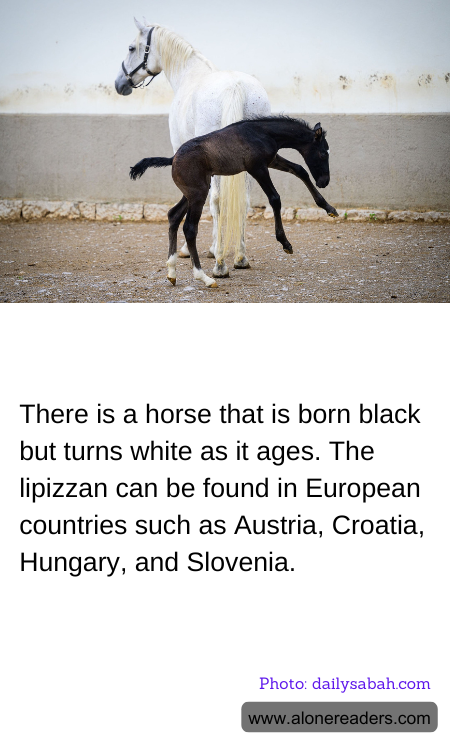
In the enchanting world of equine wonders, few breeds captivate the imagination quite like the Lipizzan horse. Known for its remarkable transformation from black to white as it matures, the Lipizzan is a living testament to nature's artistry. This unique breed, steeped in history and tradition, can be found gracing the landscapes of European countries such as Austria, Croatia, Hungary, and Slovenia.
The Lipizzan's journey begins with a striking birth. Foals are typically born with a dark coat, ranging from black to brown, which gradually lightens over the years. By the time they reach the age of six to ten, most Lipizzans have transitioned to a stunning white or gray, a change that is as mysterious as it is beautiful. This transformation is not merely a visual spectacle but also a symbol of the breed's resilience and adaptability, qualities that have been cherished for centuries.
Originating in the late 16th century, the Lipizzan breed was developed by the Habsburg monarchy, who sought a horse that combined strength, agility, and grace. The breed's name is derived from the Lipica Stud Farm in modern-day Slovenia, where these horses were first bred. Over the years, Lipizzans have become synonymous with classical dressage, particularly the haute école or "high school" movements, which showcase their extraordinary athleticism and intelligence.
The Lipizzan's connection to European culture is profound. In Austria, the Spanish Riding School in Vienna is world-renowned for its Lipizzan performances, where riders and horses demonstrate a harmonious partnership that has been honed over centuries. These performances are not just displays of equestrian skill but are also cultural treasures that celebrate the rich heritage of the region.
In Croatia, Hungary, and Slovenia, Lipizzans are cherished not only for their beauty and grace but also for their historical significance. These countries have played pivotal roles in preserving the breed, ensuring that the legacy of the Lipizzan continues to thrive. The horses are often seen in parades, festivals, and other cultural events, serving as proud symbols of national pride and tradition.
The Lipizzan's transformation from black to white is more than a mere change in color; it is a metaphor for the enduring legacy of a breed that has captured the hearts of many. Whether performing in the grand arenas of Vienna or grazing in the serene pastures of Slovenia, the Lipizzan horse remains a majestic reminder of the beauty and mystery of the natural world. For those fortunate enough to witness their elegance, the Lipizzan offers a glimpse into a world where history, culture, and nature converge in perfect harmony.