More About This Card
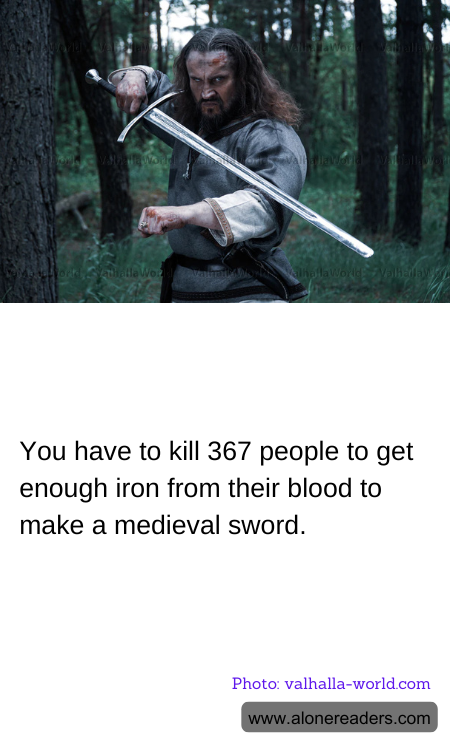
The notion that one would need to kill 367 people to extract enough iron from their blood to forge a medieval sword is a fascinating blend of science, history, and a touch of the macabre. This concept, while not intended to be taken literally, serves as an intriguing way to explore the composition of both the human body and the tools of ancient warfare.
Human blood contains iron, an essential element for life, primarily found in hemoglobin, the protein responsible for transporting oxygen throughout the body. On average, an adult human body contains about 3 to 4 grams of iron. In contrast, a typical medieval sword, depending on its size and design, might weigh anywhere from 1.5 to 3 kilograms. Given that iron makes up only a small fraction of the total weight of a sword, the amount of iron required would be significantly more than what a single human body could provide.
The calculation that it would take the iron from 367 people to make one sword is based on the assumption that each person contributes their entire iron content. This is, of course, a theoretical exercise rather than a practical or ethical proposition. It highlights the vast difference between the minute quantities of elements that sustain life and the substantial amounts needed for human-made objects.
Medieval swords were typically made from iron or steel, materials that were laboriously extracted from the earth through mining and smelting processes. The transformation of raw ore into a functional weapon was a testament to the ingenuity and skill of blacksmiths of the time. These craftsmen relied on the natural resources available to them, rather than the iron found in living organisms, to create the tools and weapons that defined an era.
This thought experiment also serves as a reminder of the interconnectedness of life and the materials that make up our world. Iron, a fundamental building block of life, is also a critical component of the tools and technologies that have shaped human history. The same element that courses through our veins has been used to forge the swords that played pivotal roles in battles and legends.
While the idea of using human blood to create a sword is purely hypothetical and not feasible, it sparks curiosity about the natural world and the historical processes that have brought us to where we are today. It encourages us to appreciate the resources we have and the innovations that have allowed us to harness them, all while reflecting on the ethical considerations that guide our use of these resources.