More About This Card
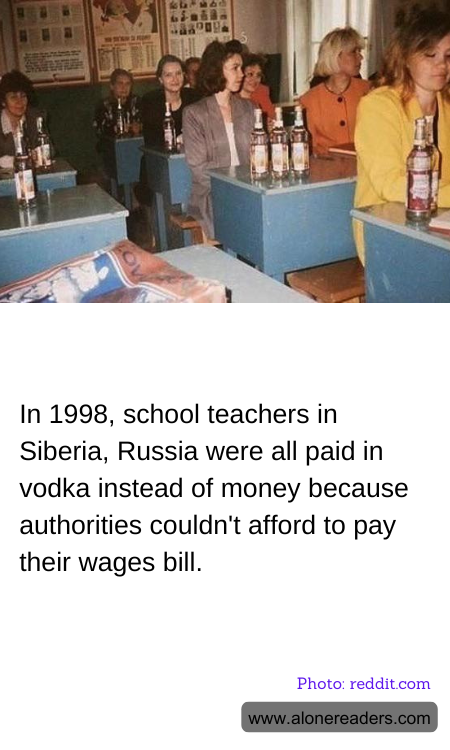
In 1998, a peculiar and somewhat surreal situation unfolded in Siberia, Russia, where school teachers found themselves being compensated not with the usual currency, but with vodka. This unusual form of payment was not a whimsical decision but rather a desperate measure taken by local authorities who were grappling with severe financial constraints. The economic turmoil of the late 1990s in Russia, exacerbated by the collapse of the Soviet Union, left many regions struggling to meet their financial obligations, and Siberia was no exception.
The decision to pay teachers in vodka was a reflection of the dire economic conditions that plagued the country during this period. The Russian government was facing a significant budget deficit, and many public sector workers, including teachers, went months without receiving their salaries. In Siberia, where the harsh climate and remote location already posed significant challenges, the situation was particularly acute. With no money to pay wages, local authorities resorted to using vodka, a commodity that was both abundant and highly valued, as a form of currency.
This unconventional method of payment was met with mixed reactions. For many teachers, it was a humiliating experience, reducing their professional contributions to a barter system reminiscent of a bygone era. However, for others, it was a pragmatic solution to an otherwise untenable situation. Vodka, being a staple in Russian culture, could be traded for other goods and services, allowing teachers to meet their basic needs despite the lack of cash.
The incident highlighted the broader economic struggles facing Russia at the time. The country was in the throes of a financial crisis, characterized by hyperinflation, a devalued ruble, and widespread unemployment. The government's inability to pay public sector workers underscored the systemic issues within the Russian economy, which were only beginning to be addressed in the years that followed.
While the notion of being paid in vodka might seem amusing or bizarre to outsiders, it serves as a poignant reminder of the resilience and adaptability of individuals in the face of adversity. The teachers of Siberia, despite the challenges, continued to educate and inspire their students, demonstrating a commitment to their profession that transcended the economic hardships they faced.
Today, the story of Siberian teachers being paid in vodka stands as a testament to a tumultuous period in Russian history. It serves as a cautionary tale about the importance of economic stability and the impact of financial crises on everyday lives. As Russia has since moved towards greater economic stability, the episode remains a vivid illustration of the lengths to which people will go to maintain a semblance of normalcy in the face of overwhelming challenges.