More About This Card
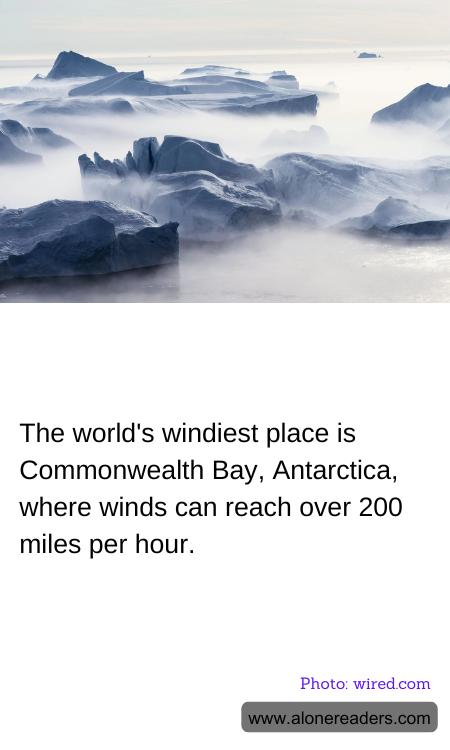
Commonwealth Bay, located in the eastern part of Antarctica, holds the title of the world's windiest place. This remote and icy expanse is notorious for its relentless katabatic winds, which can reach staggering speeds of over 200 miles per hour. These winds are a result of cold, dense air descending from the high interior of the continent and accelerating as it moves downhill towards the coast. The unique topography and climatic conditions of Antarctica contribute to this extraordinary natural phenomenon, making Commonwealth Bay a place of both scientific interest and extreme weather conditions.
The bay was first explored during the Australasian Antarctic Expedition led by Sir Douglas Mawson between 1911 and 1914. Mawson and his team experienced firsthand the ferocity of the winds, which often made their scientific endeavors both challenging and dangerous. The winds are not only powerful but also persistent, with gusts frequently exceeding 100 miles per hour. This makes Commonwealth Bay an inhospitable environment, where survival requires careful planning and robust equipment.
Despite its harsh conditions, Commonwealth Bay is a site of significant scientific research. The extreme weather provides valuable data for understanding wind patterns and climate dynamics in polar regions. Researchers study the impact of these winds on ice formation and movement, as well as their influence on global weather systems. The bay's unique conditions offer insights into the broader implications of climate change, particularly in understanding how polar regions are responding to rising global temperatures.
The wildlife in Commonwealth Bay has adapted to the extreme conditions. Emperor penguins, one of the few species that can withstand the harsh Antarctic climate, are a common sight. These resilient birds have evolved to endure the cold and wind, using their huddling behavior to conserve warmth and protect themselves from the elements. The bay's ecosystem, though limited, is a testament to nature's ability to adapt and thrive even in the most challenging environments.
For adventurers and scientists alike, Commonwealth Bay represents both a formidable challenge and a unique opportunity. The bay's extreme winds and icy landscape are a reminder of the power and unpredictability of nature. While few people will ever experience the bay firsthand, its reputation as the world's windiest place continues to capture the imagination and inspire awe. As research continues, Commonwealth Bay remains a crucial location for understanding the complexities of Earth's climate and the resilience of life in extreme conditions.