More About This Card
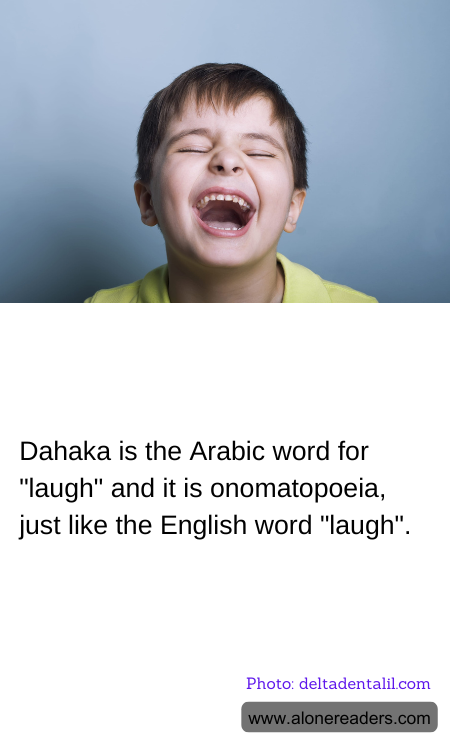
The beauty of language lies in its ability to convey emotions and actions through words that often mimic the sounds they describe. This phenomenon, known as onomatopoeia, is a fascinating aspect of linguistics that transcends cultural boundaries. One intriguing example of this is the Arabic word "dahaka," which means "laugh." Much like its English counterpart, "laugh," "dahaka" is an onomatopoeic word that captures the essence of the sound associated with laughter.
In the rich tapestry of the Arabic language, "dahaka" stands out as a word that not only describes an action but also evokes the sound of laughter itself. This linguistic feature is not unique to Arabic; many languages around the world have words that imitate the sounds they represent. In English, words like "buzz," "meow," and "sizzle" are familiar examples. Similarly, "dahaka" embodies the joyful and spontaneous sound of laughter, making it a delightful word to both say and hear.
The universality of laughter as a human expression is mirrored in the way different cultures have developed words to describe it. Despite the diversity of languages, the sound of laughter is remarkably similar across the globe. This universality is perhaps why onomatopoeic words for laughter, like "dahaka" and "laugh," resonate so well with speakers of different languages. They capture the essence of a shared human experience, transcending linguistic barriers and connecting people through the simple act of laughing.
Laughter is a powerful social tool, often used to express joy, amusement, and even to diffuse tension. It is a natural response that can bring people together, creating bonds and fostering a sense of community. The onomatopoeic nature of words like "dahaka" and "laugh" enhances this connection by providing a verbal representation of the sound that is universally understood. Whether in a bustling market in Cairo or a quiet park in London, the sound of laughter is instantly recognizable and often contagious.
In exploring the word "dahaka," we are reminded of the playful and creative aspects of language. It highlights how words can be more than just symbols or sounds; they can be expressions of culture, emotion, and shared human experiences. The onomatopoeic quality of "dahaka" serves as a testament to the ingenuity of language and its ability to capture the essence of life’s most delightful moments.
In conclusion, "dahaka" is more than just a word for "laugh" in Arabic; it is a linguistic bridge that connects people through the universal sound of laughter. Its onomatopoeic nature allows it to transcend cultural and linguistic boundaries, reminding us of the shared joy that laughter brings to our lives. As we celebrate the diversity of languages, we also embrace the common threads that unite us, with laughter being one of the most joyous and unifying sounds of all.