More About This Card
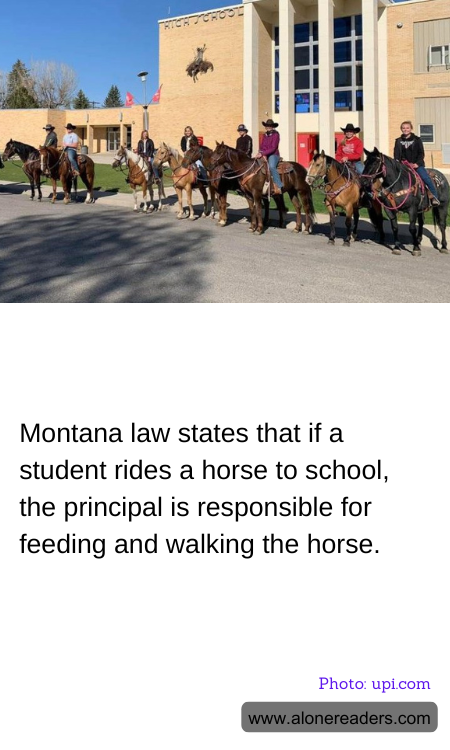
In the vast and picturesque landscapes of Montana, where the spirit of the Old West still lingers, an intriguing and charming law continues to capture the imagination of residents and visitors alike. This unique statute states that if a student rides a horse to school, the principal is responsible for feeding and walking the horse. While it may sound like a relic from a bygone era, this law reflects Montana's deep-rooted connection to its equestrian heritage and rural lifestyle.
Montana, known for its rugged terrain and expansive ranches, has a long history of horseback riding as a primary mode of transportation. In the early days, when cars were a luxury few could afford, horses were essential for getting around, especially in rural areas. Schools, often located miles away from students' homes, saw many children arriving on horseback. To accommodate this, the law was likely enacted to ensure that these noble steeds were cared for during the school day, allowing students to focus on their studies without worrying about their equine companions.
While the law may seem quaint in today's modern world, where cars and buses dominate school transportation, it serves as a delightful reminder of Montana's cultural heritage. It also highlights the state's commitment to preserving its traditions and respecting the role that horses have played in its development. In a world that is increasingly fast-paced and technology-driven, such laws offer a nostalgic glimpse into a simpler time when life moved at a slower pace, and the bond between humans and animals was more pronounced.
For principals in Montana, the law adds a unique twist to their daily responsibilities. While it is unlikely that many students today ride horses to school, the law remains on the books, ready to be enacted should the need arise. It is a testament to the adaptability and resourcefulness of school administrators who, in the spirit of Montana's pioneering past, would undoubtedly rise to the occasion with a sense of humor and dedication.
This quirky law also serves as an educational tool, sparking curiosity and discussions among students about the history of their state and the evolution of transportation. It encourages young minds to appreciate the past and consider how traditions can coexist with modern advancements. Moreover, it fosters a sense of community and shared responsibility, reminding everyone of the importance of caring for animals and respecting the environment.
In conclusion, while the law requiring principals to feed and walk horses may seem anachronistic, it is a charming reflection of Montana's rich history and enduring connection to its equestrian roots. It stands as a symbol of the state's unique character, where the past is cherished, and the spirit of the West continues to thrive. Whether or not it is ever put into practice, the law remains a delightful piece of Montana's legal tapestry, capturing the imagination and hearts of all who encounter it.