More About This Card
In the delightful world of animal sounds, the duck holds a special place with its distinctive vocalization known as a "quack." This sound is so iconic that it has become synonymous with the bird itself, often used in children's books, cartoons, and even as a playful onomatopoeia in everyday language. The quack of a duck is not just a random noise; it serves as a crucial form of communication among these waterfowl. Ducks use their quacks to express a variety of messages, from signaling distress to calling their ducklings or even establishing territory. The quack is a versatile sound that plays an essential role in the social dynamics of duck communities.
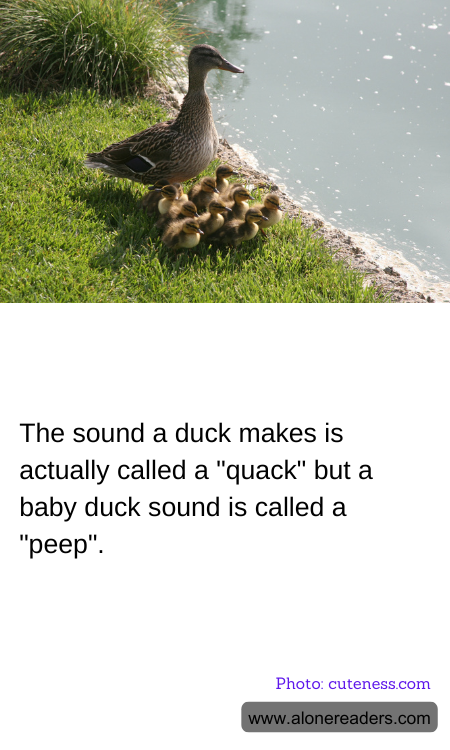
While the adult duck's quack is widely recognized, the sounds made by baby ducks, or ducklings, are equally fascinating. Unlike their adult counterparts, ducklings produce a sound known as a "peep." This soft, high-pitched noise is a charming aspect of their early life, often heard as a gentle chorus when a brood of ducklings follows their mother. The peep serves several important functions. It helps ducklings communicate with their mother and siblings, ensuring they stay together and safe from predators. The peep is also a way for ducklings to express their needs, such as hunger or discomfort, prompting the mother duck to respond accordingly.
The distinction between the quack and the peep highlights the developmental stages of ducks and their communication needs. As ducklings grow, their vocalizations evolve, eventually transitioning from the gentle peep to the more robust quack of adulthood. This transformation is a natural part of their maturation process, reflecting their growing independence and changing social roles within their group. The transition from peep to quack is not just a change in sound but a reflection of the duck's journey from the vulnerability of infancy to the confidence of adulthood.
Understanding these sounds enriches our appreciation of ducks and their behaviors. It reminds us of the complexity and beauty of nature's communication systems, where even the simplest sounds carry profound meanings. For those who enjoy observing wildlife, recognizing the difference between a quack and a peep can enhance the experience, offering insights into the lives of these charming creatures. Whether in a serene pond or a bustling park, the sounds of ducks and ducklings add a layer of joy and wonder to our natural surroundings.
In conclusion, the quack and the peep are more than just sounds; they are vital tools for survival and social interaction in the duck world. They illustrate the fascinating ways in which animals communicate and adapt to their environments. By paying attention to these sounds, we can gain a deeper understanding of the natural world and the intricate lives of the creatures that inhabit it.