More About This Card
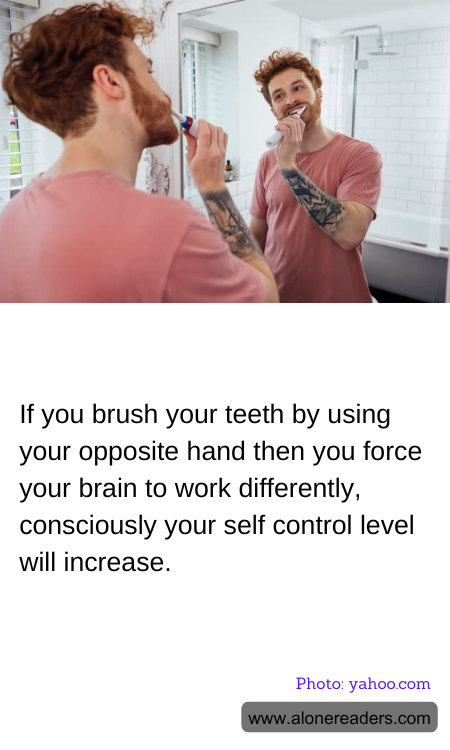
Brushing your teeth is a routine activity that most people perform without much thought. However, introducing a simple twist to this daily habit—by using your non-dominant hand—can have surprising benefits for your brain and self-control. This small change can stimulate your brain to work differently, enhancing cognitive function and increasing your level of self-control.
When you brush your teeth with your opposite hand, you are essentially challenging your brain to adapt to a new way of doing a familiar task. This requires more mental effort and concentration, as your brain must engage in problem-solving and coordination to complete the task effectively. This process activates different neural pathways and can lead to the formation of new connections in the brain. Over time, this can improve brain plasticity, which is the brain's ability to adapt and change throughout life.
Engaging in activities that require the use of your non-dominant hand can also enhance self-control. Self-control is the ability to regulate one's emotions, thoughts, and behaviors in the face of temptations and impulses. By consciously choosing to brush your teeth with your opposite hand, you are practicing self-discipline and focus. This act of self-regulation can spill over into other areas of your life, helping you to manage stress, resist unhealthy habits, and make more mindful decisions.
Moreover, using your non-dominant hand can improve your attention to detail. Because the task is more challenging, you are likely to be more present and attentive, which can enhance your overall mindfulness. This increased awareness can lead to better decision-making and a greater appreciation for the present moment.
Incorporating this simple exercise into your daily routine is a practical way to boost your brain health and self-control. It requires no special equipment or significant time investment, making it accessible to people of all ages. Whether you are a student looking to improve focus, a professional seeking better stress management, or a senior aiming to maintain cognitive health, this small change can have a positive impact.
In conclusion, brushing your teeth with your opposite hand is more than just a quirky experiment. It is an effective exercise for your brain that can enhance cognitive function, increase self-control, and improve mindfulness. By challenging your brain in this way, you are taking a proactive step towards better mental health and well-being. So, the next time you reach for your toothbrush, consider switching hands and experience the benefits for yourself.