More About This Card
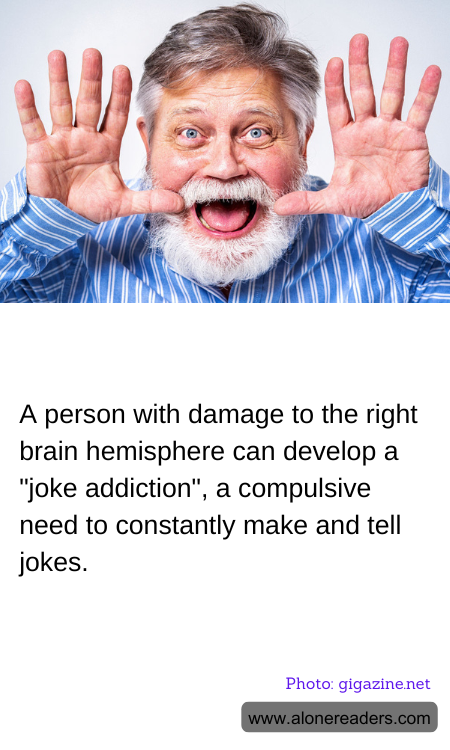
The human brain is a complex organ, with each hemisphere responsible for different functions. While the left hemisphere is often associated with logical reasoning and language skills, the right hemisphere is linked to creativity, spatial abilities, and the interpretation of emotions. Damage to the right hemisphere can lead to a variety of unusual behaviors, one of which is a lesser-known condition sometimes referred to as "joke addiction." This phenomenon involves a compulsive need to make and tell jokes, often at inappropriate times, and can be both fascinating and challenging for those affected and their families.
Joke addiction, or Witzelsucht, as it is sometimes called in medical literature, is characterized by an uncontrollable urge to produce puns, jokes, and humorous remarks. This condition can arise after an injury or stroke that affects the right frontal lobe of the brain. The frontal lobe is crucial for regulating behavior, emotions, and social interactions. When this area is compromised, individuals may lose the ability to gauge the appropriateness of their humor, leading to a constant stream of jokes that can be socially disruptive.
For those experiencing joke addiction, humor becomes a compulsive behavior rather than a voluntary action. While humor is generally a positive trait, providing joy and connection, in this context, it can become a source of frustration and embarrassment. The jokes may not always be funny to others, and the incessant nature of the humor can strain relationships and social interactions. Family members and friends may find it difficult to cope with the constant barrage of jokes, especially if they occur during serious or solemn occasions.
Understanding the underlying mechanisms of joke addiction can offer insights into the broader functions of the brain. The condition highlights the role of the right hemisphere in processing humor and regulating social behavior. It also underscores the importance of balance between the brain's hemispheres in maintaining appropriate social conduct. Researchers continue to study this phenomenon to better understand how brain injuries can alter personality and behavior, with the hope of developing effective treatments and interventions.
For those living with joke addiction, therapy and support can be beneficial. Cognitive-behavioral therapy may help individuals recognize and modify their behavior, while support groups can provide a space for sharing experiences and coping strategies. It is essential for family members and caregivers to approach the situation with empathy and patience, recognizing that the behavior is a result of neurological changes rather than intentional misconduct.
In conclusion, joke addiction is a compelling example of how brain injuries can lead to unexpected changes in behavior. While it may seem amusing at first glance, the condition presents real challenges for those affected and their loved ones. By increasing awareness and understanding of this condition, we can foster a more supportive environment for individuals dealing with the complexities of brain injury-related behavioral changes.