More About This Card
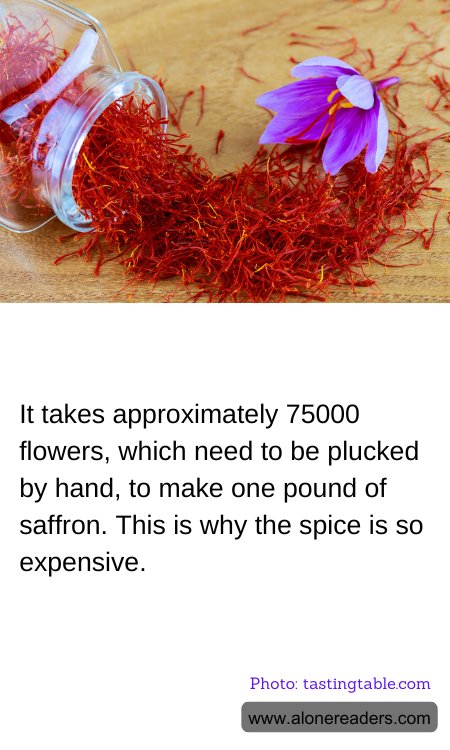
Saffron, often referred to as "red gold," is one of the most expensive spices in the world. Its high price is not merely a reflection of its unique flavor and vibrant color but also a testament to the labor-intensive process required to produce it. The journey of saffron from flower to spice is a meticulous one, involving the careful hand-picking of approximately 75,000 flowers to yield just one pound of the precious threads.
The saffron crocus, scientifically known as Crocus sativus, blooms in the fall, producing delicate purple flowers that house the coveted red stigmas. Each flower contains only three stigmas, which are the parts harvested to make saffron. This means that to produce a single pound of saffron, tens of thousands of flowers must be individually plucked by hand. This laborious task is typically carried out by skilled workers who must rise early in the morning to pick the flowers before the sun becomes too hot, which can cause the flowers to wilt and the stigmas to lose their potency.
Once harvested, the stigmas are carefully separated from the flowers and dried, a process that further reduces their weight. The drying process is crucial as it enhances the flavor and aroma of the saffron, transforming it into the spice that is so highly prized in culinary traditions around the world. The entire process, from cultivation to drying, requires not only precision and care but also a significant amount of time and effort, contributing to the spice's high cost.
Saffron's price is also influenced by its limited growing regions. The spice thrives in specific climates, with Iran, India, and Spain being the primary producers. The delicate nature of the saffron crocus means that it cannot be easily cultivated in other regions, adding to its rarity and value. Furthermore, the spice's quality is often determined by its color, flavor, and aroma, with the highest quality saffron being deep red with a strong, distinctive scent.
Despite its cost, saffron remains a beloved ingredient in many cuisines, known for its ability to impart a rich golden hue and a complex, earthy flavor to dishes. It is used in a variety of recipes, from the luxurious Persian rice dish, tahdig, to the Spanish classic, paella. Beyond its culinary uses, saffron has also been valued for its medicinal properties, believed to have mood-enhancing and antioxidant benefits.
In conclusion, the high price of saffron is a reflection of the intricate and labor-intensive process required to produce it, as well as its limited growing regions and exceptional qualities. This spice, with its rich history and cultural significance, continues to be a symbol of luxury and refinement, cherished by chefs and home cooks alike for its unparalleled flavor and color.