More About This Card
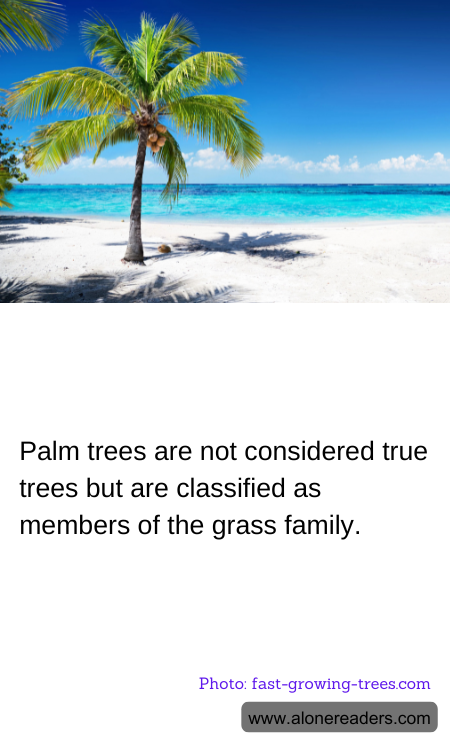
Palm trees, with their iconic silhouettes and tropical allure, are often associated with sandy beaches and sunny skies. However, a lesser-known fact about these captivating plants is that they are not considered true trees in the botanical sense. Instead, palm trees are classified as members of the grass family, a distinction that sets them apart from the traditional trees we are familiar with.
The classification of palm trees as part of the grass family, scientifically known as Poaceae, is rooted in their unique biological characteristics. Unlike true trees, which are typically characterized by their woody trunks and branches, palms possess a structure more akin to grasses. Their trunks, known as stems, are composed of fibrous tissue rather than the dense wood found in trees like oaks or pines. This fibrous structure allows palms to be flexible and resilient, enabling them to withstand strong winds and adverse weather conditions often found in their native tropical and subtropical environments.
Another distinguishing feature of palms is their growth pattern. True trees grow by adding layers of wood to their trunks, a process known as secondary growth. In contrast, palms grow from a single point at the top of their stem, known as the apical meristem. This means that palms do not increase in girth as they age, but rather grow taller, with new leaves emerging from the top. This growth pattern is more similar to that of grasses, which also lack secondary growth.
The leaves of palm trees further illustrate their connection to the grass family. Palm leaves, often referred to as fronds, are long and narrow, resembling the blades of grass. These fronds are typically arranged in a spiral pattern at the top of the stem, creating the familiar crown that is synonymous with palm trees. This leaf structure is efficient for capturing sunlight and maximizing photosynthesis, a crucial adaptation for survival in the often harsh environments where palms thrive.
Despite their classification as members of the grass family, palm trees play a significant role in ecosystems and human culture. They provide habitat and food for a variety of wildlife, and their fruits, such as coconuts and dates, are important food sources for humans. Additionally, palms have cultural and economic significance in many regions, symbolizing peace, victory, and fertility.
In conclusion, while palm trees may not fit the traditional definition of a tree, their unique characteristics and adaptations make them a fascinating and vital part of the natural world. Their classification as members of the grass family highlights the incredible diversity of plant life and the intricate ways in which plants have evolved to thrive in their environments. Whether swaying gently in a coastal breeze or standing tall in a desert oasis, palm trees continue to captivate and inspire people around the globe.