More About This Card
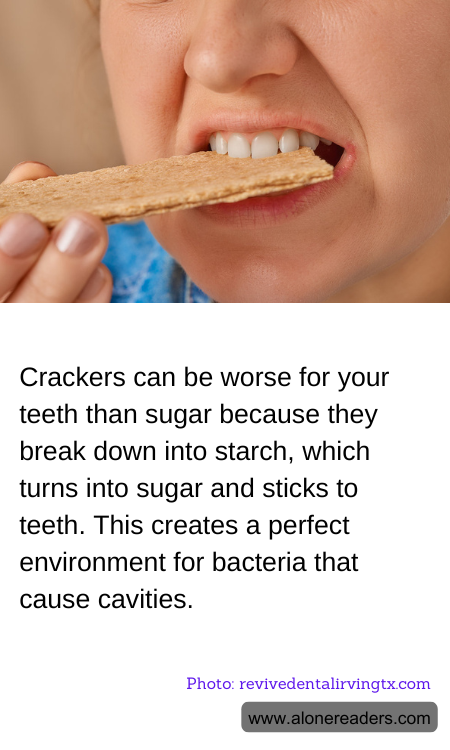
When it comes to dental health, sugar has long been the villain in the story. Parents, dentists, and health experts have consistently warned about the dangers of sugary treats, from candies to sodas, in causing cavities and tooth decay. However, a less obvious culprit lurks in many of our pantries: crackers. These seemingly harmless snacks can be more detrimental to our teeth than sugar itself, primarily because of how they break down in the mouth.
Crackers, along with other starchy foods like bread and chips, undergo a transformation once they enter the oral cavity. As we chew, these foods break down into simple sugars, thanks to the enzymes present in our saliva. This process turns the starches into sugars that can easily adhere to the surfaces of our teeth. Unlike sugar, which is often washed away quickly by saliva or a drink, the sticky residue from crackers can linger, creating a breeding ground for harmful bacteria.
These bacteria thrive in the sugary environment left behind by starchy foods. As they feed on the sugars, they produce acids as a byproduct. These acids are the real culprits in tooth decay, as they erode the enamel, the protective outer layer of our teeth. Over time, this erosion can lead to cavities, which, if left untreated, can cause significant dental issues.
One might wonder why crackers, which are not overtly sweet, pose such a risk. The answer lies in their texture and composition. Crackers are often dry and crumbly, making them more likely to get stuck in the crevices of our teeth. This is particularly true for children, who may not have the best brushing habits yet. The longer these particles remain in the mouth, the more time bacteria have to produce acid, increasing the risk of cavities.
To mitigate the risks associated with crackers and similar starchy snacks, it's essential to maintain good oral hygiene practices. Brushing twice a day with fluoride toothpaste, flossing regularly, and rinsing with an antibacterial mouthwash can help remove food particles and reduce bacterial growth. Additionally, drinking water after consuming starchy foods can help wash away some of the residue, minimizing the time sugars remain on the teeth.
In conclusion, while sugar remains a significant concern for dental health, it's crucial to recognize the hidden dangers of starchy foods like crackers. By understanding how these foods interact with our teeth and taking proactive steps to maintain oral hygiene, we can protect our smiles from the unexpected threats lurking in our favorite snacks.