More About This Card
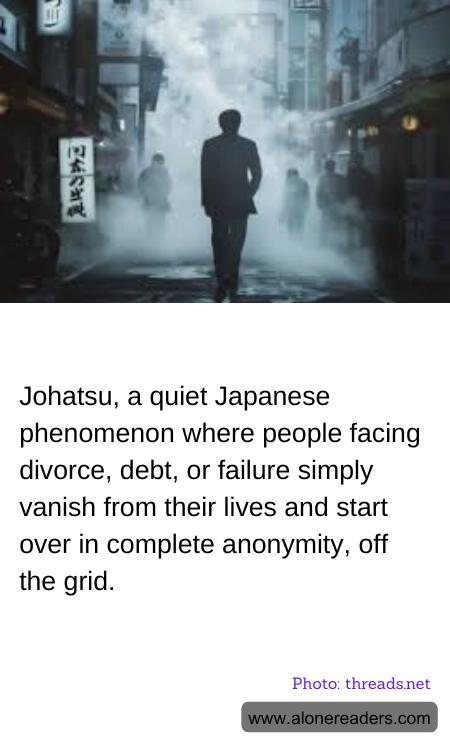
In the bustling cities and serene countryside of Japan, a quiet phenomenon known as "Johatsu" has been unfolding for decades. The term "Johatsu" translates to "evaporated people," and it refers to individuals who choose to vanish from their lives, leaving behind their past identities to start anew in complete anonymity. This phenomenon is often a response to personal crises such as divorce, debt, or failure, where the pressure to maintain societal expectations becomes overwhelming.
In a society that places immense value on social harmony and success, the stigma of failure can be particularly heavy. For some, the prospect of facing public shame or familial disappointment is unbearable. Johatsu offers an escape, a chance to shed the burdens of past mistakes and begin life afresh without the weight of judgment. These individuals often disappear without a trace, severing ties with family and friends, and relocating to places where they can blend into the background, living off the grid.
The process of becoming a Johatsu is facilitated by a network of services that cater to those wishing to disappear. These services, sometimes referred to as "night movers," help individuals relocate discreetly, often under the cover of darkness. They assist in finding new accommodations and jobs, ensuring that the transition into anonymity is as seamless as possible. While this might seem like an extreme measure, for many, it is a necessary step to reclaim their lives and mental well-being.
Despite its clandestine nature, Johatsu is not illegal in Japan. The country’s privacy laws are stringent, allowing individuals to live without being easily traced. This legal framework, combined with a cultural emphasis on personal privacy, makes it possible for people to vanish without leaving a trail. However, the emotional toll on those left behind can be significant. Families and friends are often left in a state of confusion and grief, unsure of whether their loved ones are safe or even alive.
While Johatsu might seem like a uniquely Japanese phenomenon, it raises universal questions about the pressures of modern life and the lengths to which people will go to escape them. It highlights the need for more open discussions about mental health and societal expectations, encouraging a shift towards a more supportive and understanding community. As the world becomes increasingly interconnected, the stories of the Johatsu serve as a poignant reminder of the importance of compassion and empathy in the face of personal struggles.