More About This Card
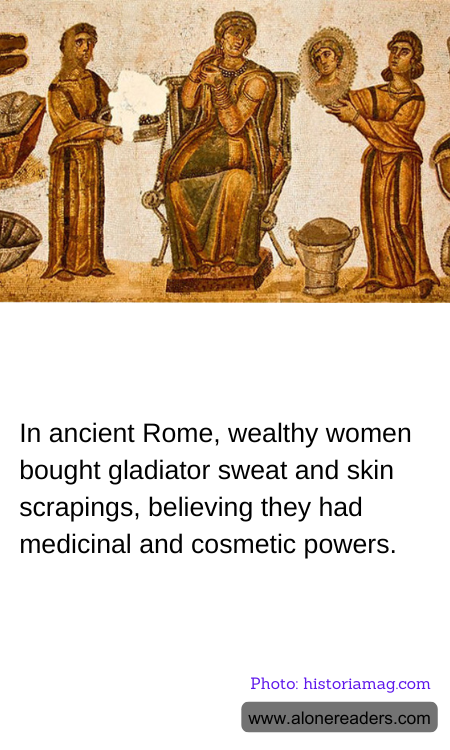
In the vibrant and multifaceted society of ancient Rome, the spectacle of gladiatorial games was not only a form of entertainment but also a cultural phenomenon that permeated various aspects of Roman life. Among the many intriguing practices of the time was the peculiar belief in the medicinal and cosmetic powers of gladiator sweat and skin scrapings. This belief was particularly prevalent among wealthy Roman women, who sought these substances for their supposed health and beauty benefits.
Gladiators, often seen as the epitome of strength and virility, were revered figures in Roman society. Their grueling training regimens and the intense physical demands of combat left them with a sheen of sweat that was believed to possess unique properties. Wealthy women, eager to capture some of the gladiators' perceived vitality and allure, would purchase vials of their sweat. This practice was rooted in the idea that the sweat of these robust fighters could imbue the wearer with similar strength and vigor, enhancing their own physical appeal.
In addition to sweat, skin scrapings from gladiators were also highly sought after. These scrapings, collected after the rigorous battles, were thought to contain the essence of the gladiators' resilience and fortitude. Women would use these scrapings in various concoctions, hoping to harness their supposed rejuvenating effects. The belief was that these remnants of the gladiators' bodies could be transformed into potent elixirs or ointments, capable of preserving youth and enhancing beauty.
The fascination with gladiator sweat and skin scrapings was not merely a reflection of the era's beauty standards but also indicative of the broader Roman fascination with the human body and its capabilities. Romans were known for their interest in health and medicine, often experimenting with various natural and unconventional remedies. The use of gladiator byproducts was just one of many practices that highlighted their innovative, albeit sometimes misguided, approach to wellness.
While modern science dismisses the notion of any real medicinal or cosmetic benefits from such practices, the historical context provides a fascinating glimpse into the values and beliefs of ancient Roman society. It underscores the lengths to which people have always gone in the pursuit of beauty and health, a pursuit that continues to evolve even today.
In essence, the allure of gladiator sweat and skin scrapings in ancient Rome serves as a testament to the enduring human desire to capture the essence of vitality and strength. It reflects a time when the boundaries between myth and medicine were blurred, and when the quest for beauty was as much about emulating the ideals of strength and power as it was about physical appearance.