More About This Card
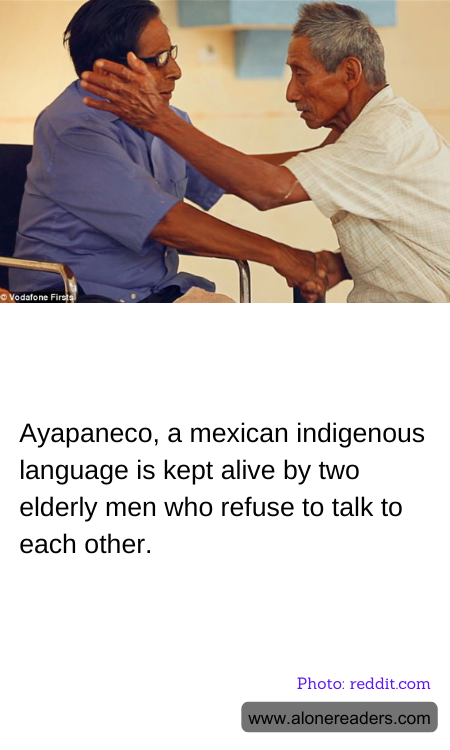
In the heart of Mexico, nestled within the rich tapestry of indigenous cultures, lies a poignant story of linguistic survival and human complexity. Ayapaneco, a language that has echoed through generations, now teeters on the brink of extinction. This ancient tongue, once spoken fluently by the inhabitants of the small village of Ayapa in the state of Tabasco, is now kept alive by the voices of just two elderly men: Manuel Segovia and Isidro Velázquez. Ironically, despite their shared mission to preserve their linguistic heritage, the two men refuse to speak to each other.
The story of Ayapaneco is a testament to the fragility of cultural heritage and the intricate dynamics of human relationships. Manuel Segovia and Isidro Velázquez, both in their 70s, are the last known fluent speakers of Ayapaneco. Their refusal to communicate with each other is not rooted in any linguistic barrier but rather in a personal rift that has persisted over the years. The reasons for their silence towards one another are not entirely clear, with some attributing it to a long-standing feud, while others suggest it might be due to differing personalities or perspectives.
Despite their silence, both men have expressed a deep commitment to preserving Ayapaneco. They have participated in efforts to document the language, working with linguists and researchers who are eager to record its vocabulary and grammar before it fades into oblivion. These efforts have led to the creation of dictionaries and educational materials aimed at teaching the language to younger generations, though the challenge remains daunting given the lack of native speakers to pass on the nuances of pronunciation and usage.
The plight of Ayapaneco is emblematic of the broader issue facing many indigenous languages worldwide. According to UNESCO, nearly half of the approximately 6,000 languages spoken globally are at risk of disappearing within a few generations. Each language that vanishes takes with it unique cultural insights, histories, and worldviews, underscoring the importance of linguistic diversity as a cornerstone of human heritage.
In Ayapa, the story of Manuel Segovia and Isidro Velázquez serves as a poignant reminder of the delicate balance between preserving cultural identity and navigating personal relationships. Their situation highlights the urgent need for collaborative efforts to safeguard endangered languages, involving not only the speakers themselves but also communities, governments, and international organizations.
As the world becomes increasingly interconnected, the preservation of languages like Ayapaneco becomes a shared responsibility. It is a call to action for all who value cultural diversity and recognize the profound loss that accompanies the extinction of a language. In the silence between Segovia and Velázquez lies a powerful message: that the survival of a language is not just about words, but about the connections and understanding that those words can foster.