More About This Card
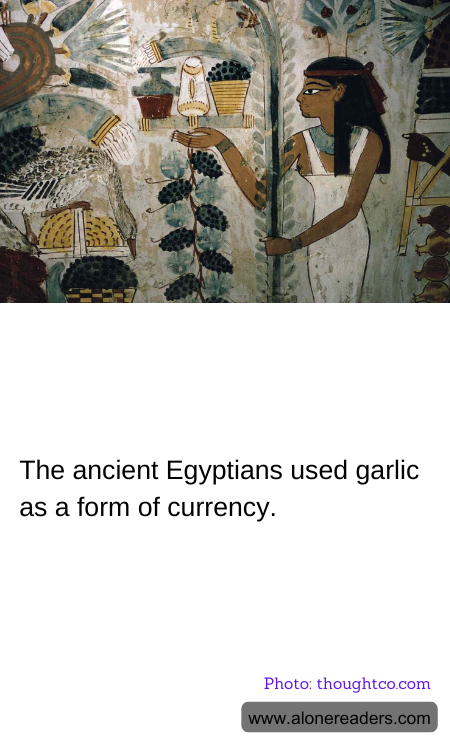
In the annals of history, ancient Egypt stands out as a civilization rich in culture, innovation, and mystique. Among its many intriguing aspects is the use of garlic, not just as a culinary staple or medicinal herb, but as a form of currency. This practice highlights the multifaceted role garlic played in ancient Egyptian society, transcending its basic utility to become a symbol of economic and cultural significance.
Garlic, with its pungent aroma and robust flavor, was highly valued in ancient Egypt. It was believed to possess powerful health benefits, which made it a staple in the diet of laborers, particularly those who built the pyramids. The workers were often given garlic to boost their strength and endurance, ensuring they could withstand the grueling demands of construction. This high demand for garlic as a dietary supplement elevated its status, making it a valuable commodity.
The use of garlic as currency is a testament to its importance in the daily lives of the Egyptians. In a society where barter was a common form of transaction, garlic served as a practical and widely accepted medium of exchange. It was used to pay workers and could be traded for other goods and services. This practice underscores the versatility of garlic, which was not only a food and medicine but also a unit of economic exchange.
Moreover, garlic's role in religious and spiritual practices further cemented its value. It was often placed in tombs and used in rituals, believed to ward off evil spirits and ensure safe passage to the afterlife. This spiritual significance added another layer to its worth, making it a desirable item for both practical and ceremonial purposes.
The ancient Egyptians' use of garlic as currency reflects their ingenuity in utilizing available resources to meet various societal needs. It also illustrates the broader economic systems of ancient civilizations, where items of everyday use could hold significant monetary value. This practice offers a fascinating glimpse into the economic and cultural dynamics of ancient Egypt, where the lines between food, medicine, and money were intriguingly blurred.
Today, while garlic is no longer used as currency, its legacy endures. It remains a beloved ingredient in cuisines worldwide and continues to be celebrated for its health benefits. The story of garlic in ancient Egypt serves as a reminder of the diverse roles that simple, everyday items can play in shaping human history and culture.