More About This Card
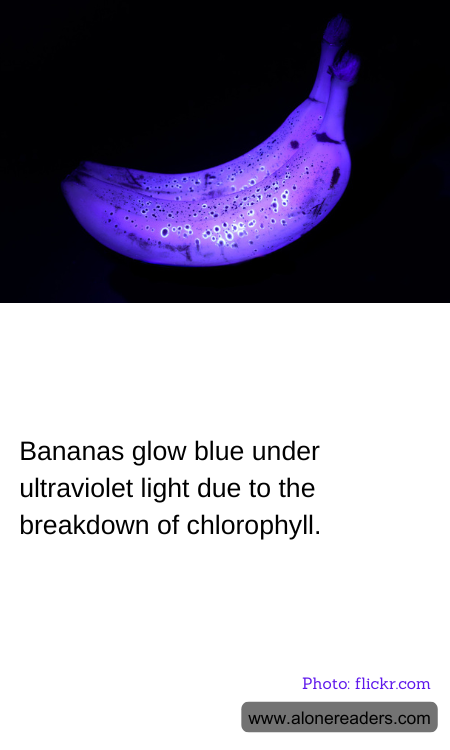
Bananas are a staple fruit in many households around the world, known for their sweet taste and nutritional benefits. However, there's a fascinating aspect of bananas that remains largely unknown to the casual observer: under ultraviolet (UV) light, bananas emit a blue glow. This intriguing phenomenon is not just a quirky party trick but a result of the natural breakdown of chlorophyll as the fruit ripens.
Chlorophyll is the pigment responsible for the green color in plants, playing a crucial role in photosynthesis by absorbing light. In bananas, as they transition from unripe to ripe, chlorophyll begins to break down. This breakdown process is part of the natural ripening cycle, during which the fruit's starches convert into sugars, making the banana sweeter and more palatable. The decomposition of chlorophyll leads to the formation of unique compounds known as chlorophyll catabolites. These compounds are responsible for the blue fluorescence observed under UV light.
The blue glow of bananas under UV light is not just a curious scientific fact but also holds potential practical applications. For instance, this phenomenon could be used as a natural indicator of ripeness, helping consumers and retailers determine the optimal time for consumption or sale. This could be particularly useful in reducing food waste, as it provides a visual cue for when a banana is at its peak ripeness, beyond the usual color changes visible to the naked eye.
Moreover, the study of chlorophyll breakdown in bananas and other fruits can offer insights into plant biology and the aging process of plant tissues. Understanding these processes can lead to advancements in agricultural practices, potentially improving the shelf life and quality of produce. Researchers continue to explore the implications of chlorophyll catabolites, not only in bananas but across a variety of plant species, to better understand their role in plant physiology and their potential benefits to human health.
For those interested in observing this phenomenon firsthand, a simple UV light can reveal the hidden blue glow of bananas. This can be an engaging educational activity for children and adults alike, sparking curiosity about the natural world and the unseen processes that occur in everyday objects. It serves as a reminder of the intricate and often surprising ways in which nature operates, offering a glimpse into the complex chemistry that underlies even the most commonplace items in our lives.
In conclusion, the blue glow of bananas under UV light is a captivating example of the hidden wonders of nature. It highlights the intricate processes involved in the life cycle of plants and offers potential applications in food science and agriculture. Whether for scientific exploration or simple curiosity, the blue fluorescence of bananas is a testament to the marvels that await discovery in the natural world.