More About This Card
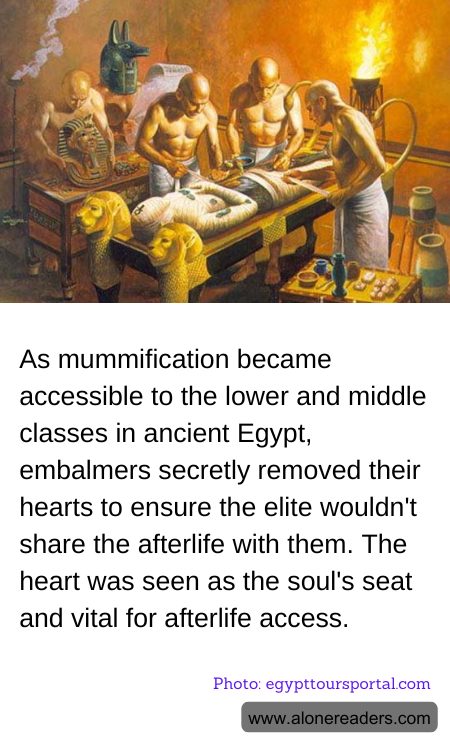
In ancient Egypt, the practice of mummification was initially reserved for the elite, a sacred ritual that ensured the deceased's passage into the afterlife. Over time, however, this intricate process became accessible to the lower and middle classes, democratizing the journey to eternity. Yet, this newfound accessibility brought with it a clandestine practice by embalmers, who sought to maintain the exclusivity of the afterlife for the elite by secretly removing the hearts of non-elite individuals.
The heart held a place of profound significance in ancient Egyptian belief. It was considered the seat of the soul and the center of intelligence and emotion. Unlike the brain, which was often discarded during mummification, the heart was believed to be essential for the deceased's journey through the afterlife. In the Hall of Ma'at, the heart would be weighed against the feather of truth, determining the soul's worthiness to enter the eternal realm. Thus, the removal of the heart was not merely a physical act but a spiritual sabotage, effectively barring the deceased from a favorable judgment in the afterlife.
As mummification techniques spread beyond the elite, embalmers found themselves in a unique position of power. They were the gatekeepers of the afterlife, possessing the knowledge and skills to preserve the body for eternity. However, with this power came the temptation to manipulate the process. By removing the hearts of those from lower social strata, embalmers could ensure that the afterlife remained an exclusive domain, reserved for those of higher status. This practice was likely carried out in secrecy, as it directly contradicted the religious and cultural beliefs that underscored the importance of the heart in the afterlife journey.
The motivations behind this practice were likely multifaceted. On one hand, it could have been driven by a desire to maintain social hierarchies even in death, reflecting the rigid class structures that defined ancient Egyptian society. On the other hand, it may have been a pragmatic decision, influenced by the limited resources and time available to embalmers as demand for mummification increased. Regardless of the reasons, the removal of the heart was a profound act that underscored the complex interplay between religion, power, and social status in ancient Egypt.
Today, the study of mummification and the practices surrounding it offers a window into the values and beliefs of ancient Egyptian society. It reveals a civilization deeply concerned with the afterlife, where the heart was not only a vital organ but a symbol of one's moral and spiritual essence. The secret removal of hearts by embalmers serves as a reminder of the lengths to which individuals would go to preserve or manipulate their place in the eternal order, a testament to the enduring human desire for immortality and legacy.