More About This Card
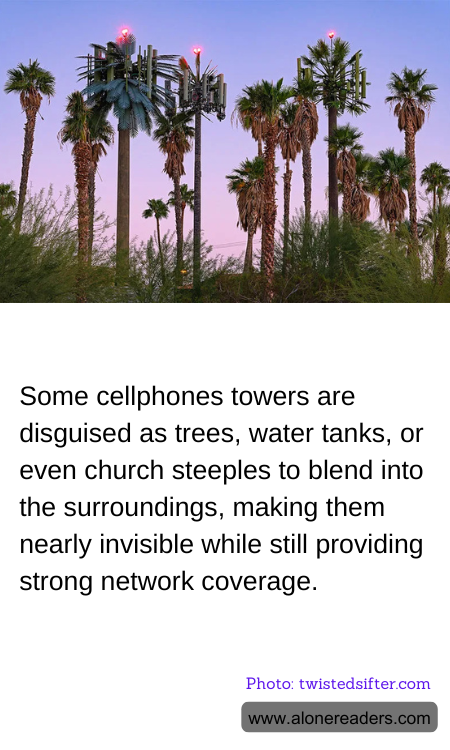
In today's world, where connectivity is as essential as electricity and water, cellphone towers have become a ubiquitous part of our landscape. However, their presence is not always welcomed, as many people find them to be eyesores that disrupt the natural beauty of their surroundings. To address this concern, an innovative solution has emerged: disguising cellphone towers as trees, water tanks, or even church steeples. This clever approach allows these structures to blend seamlessly into their environments while still providing the strong network coverage that modern life demands.
The concept of camouflaging cellphone towers is not entirely new, but it has gained significant traction in recent years as communities and telecommunications companies strive to balance technological advancement with aesthetic preservation. By disguising these towers, companies can install necessary infrastructure in areas that might otherwise resist such developments due to visual concerns. This approach not only helps maintain the visual integrity of a location but also reduces the likelihood of public opposition, which can delay or even halt the installation of essential network equipment.
One of the most common disguises for cellphone towers is the tree. These "monopines," as they are often called, are designed to mimic the appearance of pine trees, complete with branches and foliage that conceal the antennas. This design is particularly effective in wooded or suburban areas, where the faux trees can blend in with the natural landscape. Similarly, in urban environments, towers can be disguised as water tanks or integrated into the architecture of existing buildings, such as church steeples or clock towers. These creative solutions ensure that the towers remain nearly invisible to the casual observer while still fulfilling their primary function.
The benefits of these disguised towers extend beyond aesthetics. By integrating them into the environment, companies can place towers in optimal locations for signal distribution without compromising the character of the area. This strategic placement is crucial for maintaining strong network coverage, especially in densely populated or geographically challenging regions. Furthermore, by reducing the visual impact of these structures, communities are more likely to support the expansion of network infrastructure, facilitating the rollout of advanced technologies like 5G.
While the concept of camouflaged cellphone towers is not without its challenges—such as higher costs and the need for regular maintenance to ensure the disguises remain effective—the advantages they offer are significant. They represent a harmonious blend of technology and nature, allowing us to enjoy the benefits of modern connectivity without sacrificing the beauty of our surroundings. As the demand for reliable network coverage continues to grow, the artful disguise of cellphone towers will likely become an increasingly common sight, quietly supporting our digital lives while remaining hidden in plain view.