More About This Card
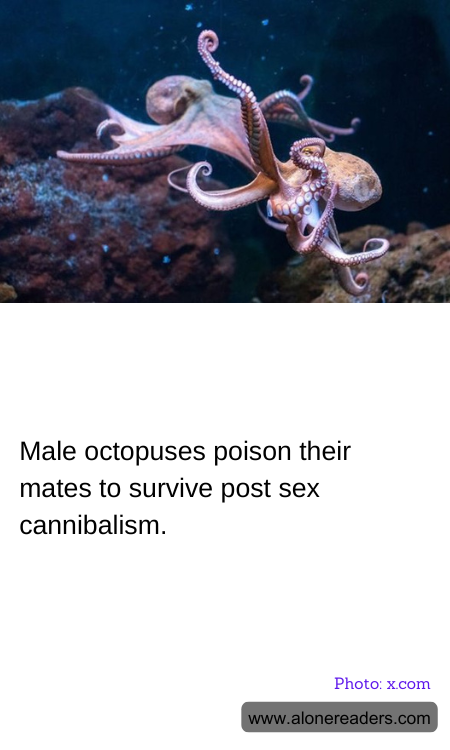
In the mysterious depths of the ocean, the octopus stands out as one of the most fascinating and enigmatic creatures. Known for their intelligence, camouflage abilities, and unique behaviors, octopuses continue to intrigue scientists and marine enthusiasts alike. One of the more curious aspects of octopus behavior is the mating ritual, which can sometimes end in a deadly encounter. In some species, male octopuses have developed a surprising strategy to avoid becoming a post-coital meal for their mates: they poison them.
The phenomenon of sexual cannibalism is not uncommon in the animal kingdom, particularly among invertebrates. In many species of octopus, the female is significantly larger than the male and may view her mate as a convenient meal after mating. This behavior is thought to provide the female with the necessary nutrients to support the development of her eggs. However, for the male octopus, this presents a life-threatening challenge. To counter this, some male octopuses have evolved a remarkable survival tactic.
Recent studies have revealed that certain male octopuses possess the ability to deliver a toxic substance to their female partners during mating. This toxin, while not lethal, temporarily incapacitates the female, giving the male a chance to escape unscathed. The exact mechanism of how the toxin is delivered remains a subject of ongoing research, but it is believed to be transferred through specialized structures on the male's arm, known as hectocotylus, which is used to transfer sperm packets to the female.
This adaptation highlights the complex interplay of survival strategies in the natural world. For the male octopus, the ability to poison his mate is a crucial evolutionary advantage, allowing him to survive and potentially mate with other females, thereby increasing his reproductive success. It also underscores the high stakes involved in the reproductive strategies of these solitary creatures, where the act of mating can be as perilous as it is essential.
While the idea of poisoning a mate may seem extreme, it is a testament to the lengths to which nature will go to ensure the continuation of a species. The male octopus's ability to navigate the dangerous waters of reproduction with such a cunning strategy is a reminder of the incredible adaptability of life in the ocean. As researchers continue to explore the depths of the sea, the octopus remains a symbol of the ocean's endless mysteries and the surprising solutions that evolution can produce.
In conclusion, the male octopus's use of poison to avoid becoming a post-mating meal is a fascinating example of evolutionary innovation. It serves as a reminder of the complex and often perilous dance of life in the ocean, where survival and reproduction are intricately linked. As we continue to learn more about these remarkable creatures, they offer valuable insights into the adaptability and resilience of life on Earth.